Right after a burst: main valve closed, power cut to wet rooms, standing water out. Next come open windows, fans, a dehumidifier and, within a day or two, removal of soaked drywall and insulation before mold gets going. Preventing the next one matters as much. Every leak topic is gathered in our leaks hub. You can open a request from the home page.
How do you dry a house after a pipe burst?
Cut the supply and the power to the wet area, then remove whatever holds moisture. Suck up standing water, lift soaked rugs, cut out saturated wallboard and insulation, and keep air movers and a dehumidifier running for days. Take photos first for the insurer. Surfaces still wet at the two-day mark invite mold.
The sequence that works:
- Close the main. Drain the pipes through the lowest faucet.
- Switch off breakers serving flooded rooms, and stay away from a wet panel.
- Photograph the damage and keep damaged goods on hand for the adjuster.
- Remove water with a wet vac, mops and towels, then pull up wet carpet and pad.
- Open windows, aim fans along wet walls and start the dehumidifier.
- Cut out drywall that stayed soaked, often well above the wet line, and discard wet insulation.
- Check the moisture again after a few days before closing walls.
Older homes can contain asbestos in flooring, mastic or textured materials, so test before scraping or sanding anything. For the repair order, see what burst-pipe water damage involves; on who pays, read insurance and burst pipes.
Why do pipes burst where winters are mild?
Because frost is only one cause. In southeast Los Angeles County the usual culprits are high water pressure, thin or corroded old pipe, a failed joint, ground movement and one-off shocks such as a water hammer slam. Freezing is uncommon here, so people rarely think about it, and that is why unnoticed pressure problems cause the surprise failures.
Whittier's supply is on the hard side; Whittier's own 2025 report gives total hardness of roughly 250 mg/L. Scale narrows pipes and water heaters, and minerals plus age speed up pitting in copper. Galvanized steel, still present in some older houses, rusts from the inside out; see galvanized pipe replacement. For symptoms, see spotting a burst pipe, and the causes of pipe bursts goes further into the mechanisms.
What water pressure should your house run at?
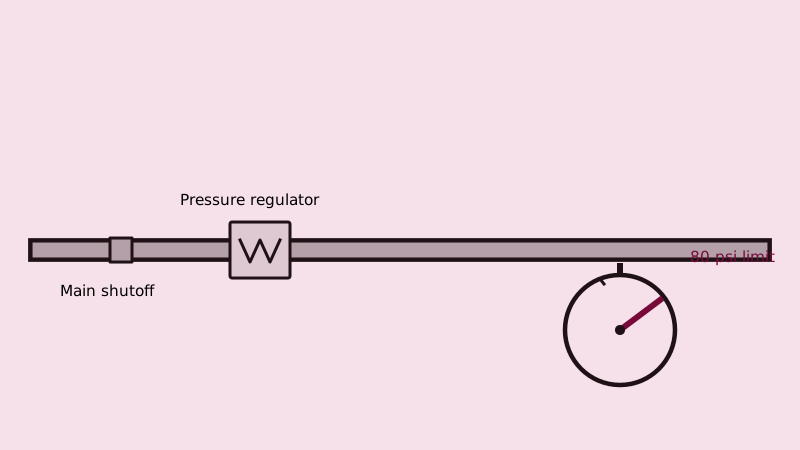
The California Plumbing Code caps house pressure at 80 psi (section 608.2), and a pressure-reducing regulator is the usual way homes stay under it. Pressure above that limit punishes every joint, hose and appliance valve, and an inexpensive hose-bib gauge measures it in a minute.
To test, thread the gauge onto an outside spigot, confirm every fixture is idle, then read the dial. Try again late at night, because pressure rises when neighbors stop using water. A figure around or over 80 suggests the regulator is failing; a plumber tests it, then installs a replacement, and the regulator adjustment guide explains the valve. A bang when a faucet shuts points to water hammer.
Which parts fail first in an older house?
Supply stops under sinks and toilets, braided or rubber connectors, washing machine hoses, the water heater's flex connectors and the main shutoff itself. Then the pipe: galvanized steel, aging copper with pinholes, and any joint soldered decades ago. Anything hidden inside a wall or beneath concrete is hardest to check.
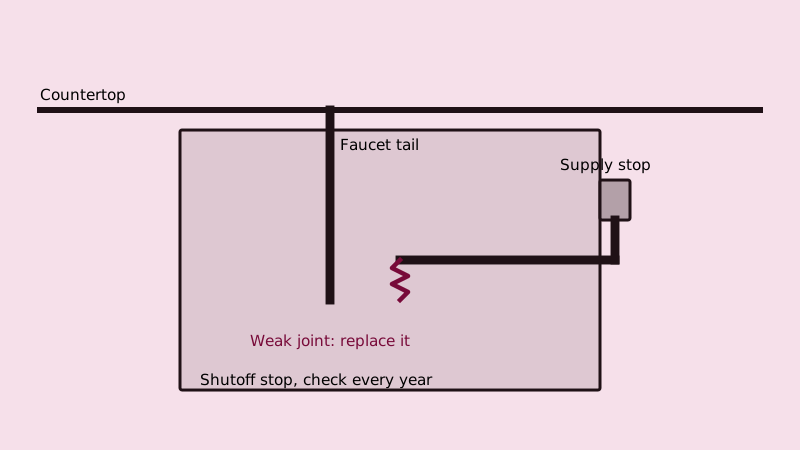
Median home ages in nearby cities point to postwar plumbing: 1957 in Norwalk and Pico Rivera, 1959 in Downey. Whittier has older housing near the center of town, though I do not have a verified median for it. Inspect, in this order:
- Washing machine hoses: braided steel outlasts rubber; shut the valves before trips.
- Toilet and sink supply lines: swap stiff or crusty ones before they split.
- Water heater connectors: look for green or white crust.
- Main shutoff: cycle it closed and open each year to keep it from seizing, and replace it if it will not budge.
- Hose bibs: look for drips behind the faucet, which signal a cracked joint inside the wall.
What habits and upgrades prevent most bursts?
Locate the main and test that it works, keep pressure under 80 psi, retire aging connectors and glance at exposed pipe twice a year. Closing the main or the washer valves for a long trip helps. Small leaks deserve quick fixes, and EPA says a single household leak can lose 9,300 gallons or more per year.
Extra measures worth considering:
- Install a leak sensor on the floor near the water heater, washer and under sinks.
- Add a shutoff device that closes the main when it detects a flow anomaly.
- Fit an expansion tank, which a closed system often needs, to smooth out pressure swings.
- Strap pipes so they cannot rattle against framing.
- In a mobile home, see winterizing mobile home plumbing.
An older system with several leaks may need more than patches. Ask whether replacement makes sense; see the repipe house page for the choices.
Which warning signs justify a service call?
Urgent: a spraying pipe, a stuck main, a wet ceiling. Soon: gauge readings near 80 psi, pinholes that keep returning, brownish water. Gas odor? That is its own emergency. Leave the house, and from a safe distance call SoCalGas on 1-800-427-2200. The emergency pipe burst page describes what happens next.
For a quote on inspection or a regulator, use the request form. When you pick someone, ask whoever you hire for a license number, then confirm it at cslb.ca.gov. California insists on a license for permit work and for anything reaching $1,000.
Common questions
Is drying a matter of hours or days?
Surface water can be gone in a day, but walls, insulation and subfloors need several days of fans and dehumidifiers to dry. Check with a moisture meter before closing walls up. Anything still damp after about two days risks mold. Big losses usually need a restoration company, and your insurer may name one.
What should a prevention visit include?
Expect a pressure reading, a check of both the regulator and the shutoff valves, and a written list of parts worth replacing. The plumber should also supply a license number and say who deals with permits, and rank findings as urgent or able to wait.
Must someone be home for an inspection?
Have an adult let the plumber in and show where the shutoff, the tank and the suspect spots are. A basic survey runs well under an hour in an ordinary house, and repairs take longer. Any shutoff gets announced with an estimate of its length.
Can I prevent bursts in a house with galvanized pipe?
A regulator and fresh connectors lower the risk, yet galvanized steel keeps corroding from the inside. Rusty water, sinking pressure or repeat leaks point toward a repipe as the lasting answer. Asking for a cut sample of the old pipe shows you its condition directly.
Does a burst pipe always flood the house?
No. A pinhole or tired joint can seep for weeks inside a wall with no puddle, then surface as stains, warped baseboard or a bigger bill. A true burst floods quickly. The meter tells the story: a moving dial with every tap closed means water is escaping.
References
- EPA WaterSense, Fix a Leak Week (leak check methods)
- California Plumbing Code section 608.2, 80 psi water pressure limit (as cited by the California Building Standards Commission)
- City of Whittier 2025 Consumer Confidence Report (hardness 230 to 270 mg/L)
- US Census ACS 2024 5-year housing data (median year built)
- SoCalGas, emergency line