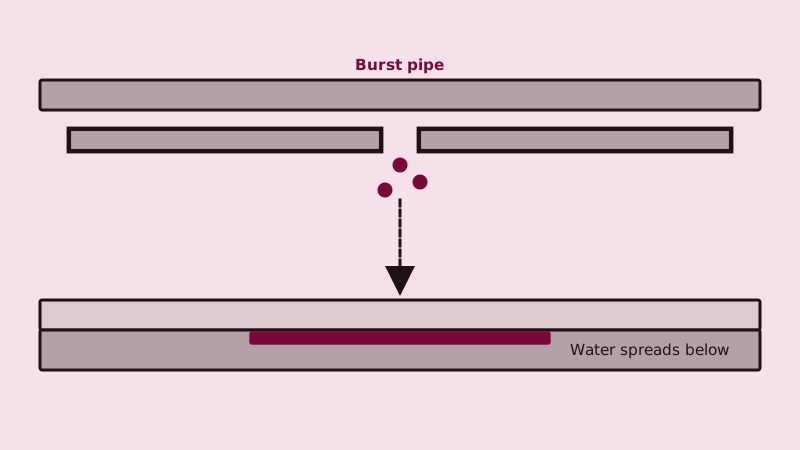
When a pipe bursts, the damage you pay for is mostly what the water did before it was shut off. Stop the flow, make the area electrically safe, and begin drying inside a day or two. EPA's guidance is that mold usually stays away if wet areas are dried out inside 24 to 48 hours. For leaks in general, see plumbing leaks; this page covers the aftermath and the cost.
Where do I start?
Shut the main water valve. Next, flip the breakers serving the soaked rooms, but only from dry ground. Empty the pipes at the lowest taps, lift valuables off the floor, and take photos of every wet surface. Only then phone a plumber to find and mend the break.
Do not stand in water near outlets, appliances or cords. If a ceiling light is dripping, back away and switch that circuit off. A main valve unused for years may be stiff, so locate it and try it now, before an emergency. If it happens at night, what an emergency burst pipe visit involves is explained separately.
How do I know a pipe has burst and not just leaked?
Bursts announce themselves with water gushing from a wall or ceiling, pressure that vanishes, a stain that grows by the minute, or running water when every fixture is closed. Slow leaks whisper instead: a pale stain, a musty odor, a meter that inches forward overnight.
To confirm, close every fixture and note the meter; note it again after a short wait. If the dial moved, water is getting out. The burst pipe checklist lists further signs, and causes are discussed under burst water pipes. Around here, breaks come more often from corrosion, pressure that runs high, a failed joint or moving ground than from frost.
How soon does mold show up after a burst pipe?
Fast. According to EPA, in a guide on moisture and mold, things that are dry again inside two days seldom grow mold, while a repaired leak with everything left damp invites a return. Absorbent materials such as carpet and ceiling tiles may be unsalvageable once moldy.
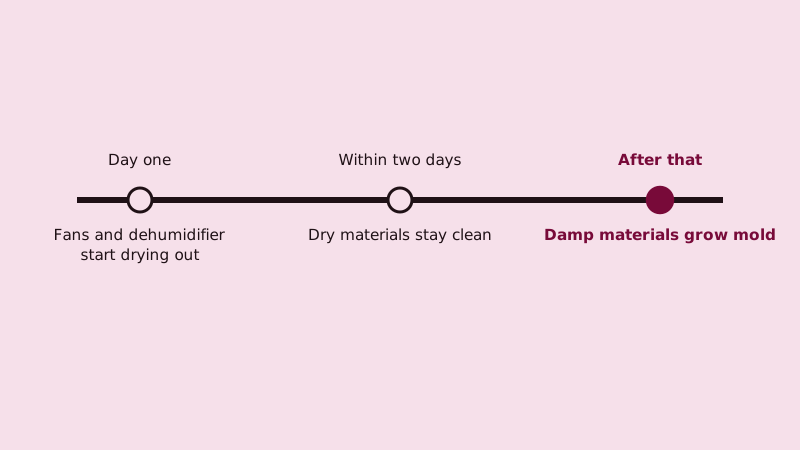
That clock makes day one matter more than week one. Fans and dehumidifiers handle small areas. Hidden moisture inside walls or under flooring calls for a restoration company with moisture meters and industrial dryers. On EPA's cleanup page, professionals come in when mold covers a patch larger than about ten square feet.
What does the pipe repair alone cost?
In Bob Vila's price table a leaky or burst pipe costs $150 to $4,000 to repair, and a ceiling pipe $500 to $2,500. The range comes from access, the pipe, and how large an opening the repair needs. An open crawlspace sits low; a break behind tile sits high.
The same table lists hourly plumber pay of $45 to $200, with after-hours calls billed at a multiple or a flat emergency fee. Ask that the quote keep the repair apart from wall opening and patching. The written quote, not this page, sets your price.
What do drying and restoration cost on top?
Bob Vila's range for restoration is $1,305 to $5,707, with $3,455 as the national average. Per square foot, clean-water drying runs $3 to $4, and dirtier water categories cost more. A burst supply pipe is normally clean water, but it can become gray if it sits on contaminated surfaces.
Mold removal is a separate bill ($1,100 to $3,400 in the guide), and new drywall, flooring and paint come on top, so drying fast pays twice. If the water was sewage or came from a drain line, EPA advises calling a professional experienced with contaminated water rather than cleaning it yourself.
Will insurance cover it?
Many homeowner policies answer for sudden, accidental water damage, burst pipes included, yet can exclude the failed pipe or damage from a long-running leak. Wording varies widely, so call your insurer promptly, ask how claims work, and save every receipt and photo.
For typical questions to ask the carrier, open insurance and burst pipes. Before approving big work, ask in writing whether the insurer requires a particular restoration vendor and what paperwork it wants. Your insurer, not this page, decides what your policy covers.
Which trades do I need?
Often two: a plumber for the pipe and a restoration company to dry and rebuild. The plumber comes first, because nothing dries while water still flows. Collect written quotes from both, and ask whether the plumber coordinates with the drying crew or leaves that to you.
Contractor licensing in California applies from $1,000 of work up, and the CSLB site lets you check a number. Be wary of big cash deposits or anyone pressing you to sign over insurance benefits on the spot. A plumber's quote starts at the price request form, and the home page lists our other services.
How do I make a repeat less likely?
Turn the main shutoff yearly, and retire old galvanized or corroded supply pipe before it fails. Have pressure checked, because the California Plumbing Code limit is 80 psi and anything above strains pipes. Swap worn washing machine hoses and aged fixture connectors.
Each step is detailed in burst pipe prevention. Postwar houses around Whittier, Downey and Norwalk often carry older supply lines, and Whittier's 2025 city water report lists hardness near 14.6 grains per gallon, and that much mineral can build scale on valves and fittings.
Common questions
How many days until the house is dry?
A small area with fans and a dehumidifier commonly needs several days. Large or hidden wet zones take longer, and hardwood or insulation dry slowly. A restoration company should measure moisture before and after and say when readings are normal.
What should I find out from the plumber?
Ask what caused the break, whether other pipes of the same age are at risk, what the repair covers, and how extra damage found behind the wall will be handled. Find out who patches the opening, and get the price and license number in writing.
Should somebody be present?
Someone over 18 needs to greet the plumber, show the break and the shutoff, and approve the finished repair. If you must be away, appoint someone you trust and close the main valve on your way out. Let the insurer know as well, because an adjuster may want a look first.
Can I keep living in the house?
Often yes if water and power are safe, but not in rooms with wet outlets, sagging ceilings or sewage. Stay out of unsafe areas, and ask the plumber or restoration company about habitability. If the water is off for the day, plan for toilets and drinking water.