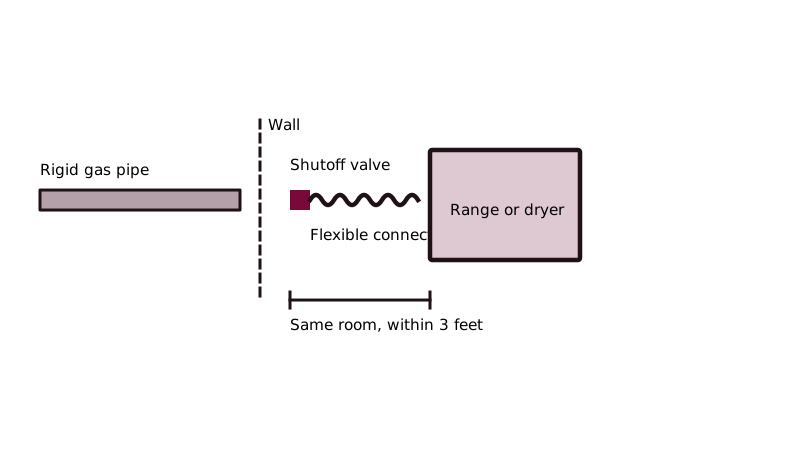
In most homes a half-inch flexible line means the braided or corrugated stainless connector that joins a gas valve to a range, dryer or water heater. Occasionally it means a short stretch of corrugated stainless tubing (CSST). Neither takes the place of rigid pipe for main runs, and every gas piping job calls for a permit and a contractor. See gas line plumber for the bigger picture.
Where does a half-inch flexible gas line belong?
At the end of the line. It links an appliance to the fixed piping so the appliance can slide out for service. Half an inch suits small loads. Capacity is limited, and big loads such as a furnace or a full kitchen need pipe sized by calculation, never guessed.
The chain runs: rigid stub from the house system, a shutoff valve you can reach, then the connector. The California Plumbing Code requires an accessible shutoff in the fuel supply at each appliance, in the same room and within 3 feet of it.
Each connector is listed for specific uses and lengths. Follow its instructions, retire the old one when a new appliance goes in, and generally keep it out of walls and floors. The code decides where connectors may run, so the city building division can answer doubts.
Which pipe materials carry natural gas in a home?
The plumbing code permits Schedule 40 wrought iron or steel (black or galvanized), corrugated stainless steel tubing, and approved polyethylene (PE) for buried exterior runs installed by trained technicians. Steel is the long-standing choice indoors, with CSST seen in newer builds.
By material:
- Steel (black iron): threaded rigid pipe, the usual choice for house runs.
- CSST: flexible stainless tubing with its own fittings, put in per the maker's instructions, normally by someone trained on that product.
- Polyethylene: outdoors and buried only, sometimes with a tracer wire, never inside a building.
- Copper: an older material with strings attached. HCD's mobile home guide says existing copper pipe must be replaced with approved gas pipe, and unlined copper cannot carry gas above a set hydrogen sulfide level.
CSST has to be sized, supported and bonded exactly as its maker specifies, and fitting errors are a recognized leak source, one reason this belongs to a plumber.
How deep must an outdoor gas line be buried?
Under the plumbing code, buried steel needs a minimum of 12 inches of soil on top and plastic pipe 18 inches. Underground iron or steel must also be electrically separated from the rest of the system by an isolation fitting set six inches or more above grade. Cities may be stricter, and an inspector looks at the trench before backfill.
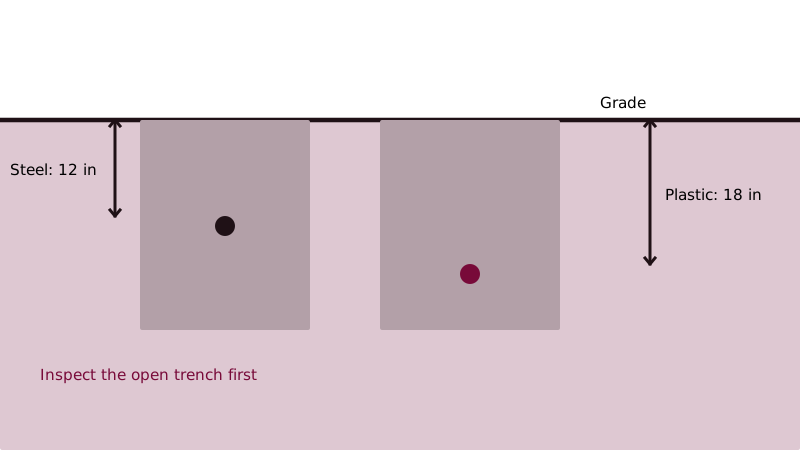
A buried outdoor line is inspected once, with the pipe in the trench and under pressure, before the dirt goes back. Hence the permit comes first: bury it early and the inspector will make you dig it up.
Depth is only one question. Running pipe beneath a building brings conduit rules of its own. For a specific property, call the city; Whittier's Building and Safety Division answers at (562) 567-9320, and neighboring cities keep their own offices.
How do mobile home gas lines differ?
They have a rulebook of their own. HCD's guide for mobilehome parks allows 1-inch nominal CSST to extend the home's gas piping if it hugs the underfloor, yet bars CSST from serving as the required flexible connector or running outside the unit without the manufacturer's approval. Buried laterals need 18 inches of cover or more.
That guide also says work at the meter is permitted and inspected by the serving utility, under the state's utilities regulator, and not by HCD or a local agency. Other alterations go to HCD or a local enforcement agency, depending on the park. Residents should find out which one applies before anyone touches gas piping.
Gas is no place for experiments in any type of home. The water and drain side of mobile home work is in installing plumbing under a mobile home.
Is a permit required, and who is allowed to do the work?
Yes. The plumbing code calls for a plumbing permit before installing, altering or repairing a gas system. Indoor piping gets two inspections, rough and final, with a pressure test using air, CO2 or nitrogen, typically 10 psi or higher held for 15 minutes in homes.
Because gas piping needs a permit, California's contractor-license requirement applies (it covers any job needing a permit or reaching $1,000 in labor and materials). Leave connecting and altering to a contractor: leaks can ignite, and a poor connection can fail months later.
Smell gas? Skip switches, lighters and indoor phones. Walk out, and from outside phone SoCalGas at 1-800-427-2200, or 911 if people are in danger. SoCalGas serves every city we cover. For more, see residential gas piping codes, gas plumber requirements and gas line cost.
For a visit, put in a price request and a local plumber arranges it. More services appear on the home page.
Common questions
Is it acceptable to stretch a gas line with a connector?
No. A connector links an appliance to fixed piping and is limited in length and location. Extending a line means rigid pipe or properly installed CSST, sized by calculation, with a permit and inspection. A plumber can design the run and pull the permit.
What cover does a buried house gas line need?
Twelve inches over steel and eighteen over plastic, per the plumbing code. Mobile home park laterals follow HCD's 18 inch floor. Local rules can be stricter, so ask the building division before any trenching starts, and expect an inspection of the open trench before backfill.
Is CSST an acceptable gas pipe?
It is an approved material when installed to the maker's instructions and supported, sized and bonded correctly. Trouble tends to come from installation errors. Choose a plumber trained on the product, and keep the instructions on site for the inspector to read.
Does swapping an appliance connector need a permit?
It is often part of a permitted appliance job, and rules for like-for-like swaps vary, so call your city's building division. Changing the fixed piping always needs a permit. If unsure, hand it to a plumber rather than gamble on a leak.
How are gas lines tested before use?
For most residential installations, the plumbing code calls for pressurizing to at least 10 psi and holding it for at least 15 minutes, using air, CO2 or nitrogen, with a gauge in the correct range. The inspector checks it, and the permit holder supplies the equipment.
References
- California Building Standards Commission, California Plumbing Code (Title 24, Part 5), Chapter 12 Fuel Gas Piping (materials, burial depth, permits, pressure test)
- California HCD, Mobilehome Park Utility Upgrade Program Installation and Inspection Guidelines, HCD MP 400 (CSST in mobile homes, gas lateral cover)
- SoCalGas, cities served