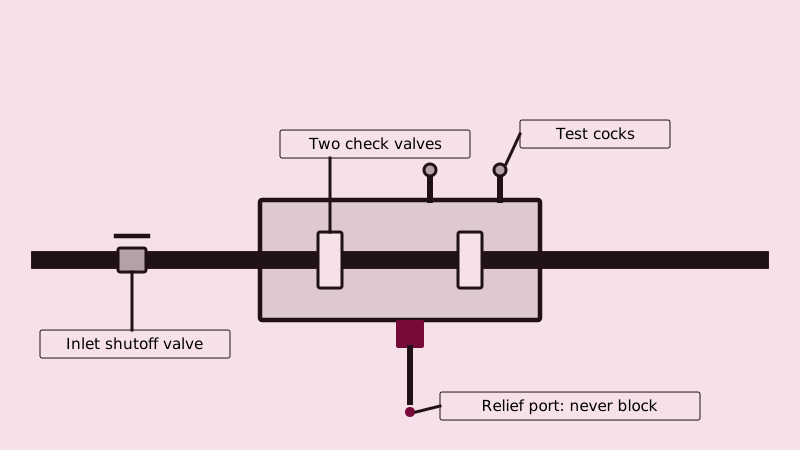
Picture a pressure drop on the street main. Without a working assembly, used water inside your building can get pulled backward into the street supply. A yearly backflow test proves the device still seals, and the water supplier wants the result on file. Whittier shops, offices, restaurants and factories get a notice when it is due. The rest of the building is covered on the commercial plumbing page.
Which Whittier businesses need a backflow test?
Properties whose supplier has recorded a cross-connection risk on the service line. Fire sprinklers, irrigation, boilers, cooling equipment, food service and industrial processes are the usual triggers. The supplier chooses which connections get an assembly and sets the testing interval, so the letter you received is the authority, not a general list.
Unsure whether you own one? Check the spot where water arrives at the building, plus any irrigation and fire lines. A bronze or steel assembly with small test cocks and two shutoff valves is the giveaway.
More than one company supplies water in Whittier. The City of Whittier runs its own system, and other suppliers cover parts of the area, so the notice comes from whoever bills you. The city's water customer service is (562) 567-9530. Golden State Water lists part of Whittier within its Central Basin East area and answers at 1-800-999-4033.
How often does an assembly have to be tested?
Yearly is the usual interval, though your supplier's notice sets the schedule. Suppliers may ask for more where the hazard is higher, and a device is also checked once it is installed, moved or repaired. Keep the notice handy, note the due date, and ask the tester to confirm what they will file and when.
Old articles cite Title 17 sections that the handbook has since replaced. Follow the notice from your own supplier and ignore an out-of-date checklist.
A missed deadline carries whatever consequences your supplier has set, so read the letter for the specifics and file it with the building records.
Who can legally do the test?
A tester holding a backflow credential from a certifying organization that California recognizes. The State Water Board says testers and cross-connection specialists working for public water systems must hold one, and from July 1, 2027 the certifying organization has to be ANSI-accredited. Some suppliers also publish their own approved tester list.
Ask to see the credential, and ask whether the supplier takes that tester's reports. A competent tester brings a calibrated test kit and files the result in the form the supplier wants, paper or portal.
We arrange a visit from a local plumber for this. Putting in or swapping an assembly counts as permitted contractor work in California. A plain test is a different, smaller job.
Walk me through the test visit
The tester hooks a gauge to the small test cocks. Valves close in a fixed sequence while the tester watches how the check valves inside and the relief valve behave under pressure. Water on the building side stops briefly. A routine assembly takes a short visit, and the pressures and pass or fail result go on the report.
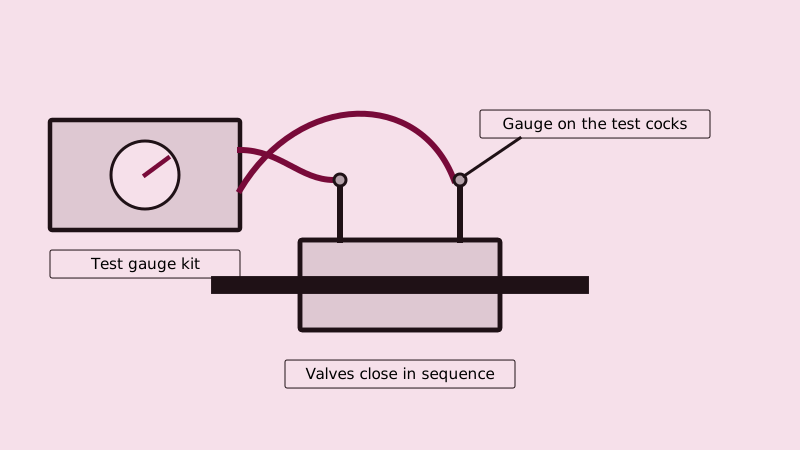
Choose a quiet hour. A salon or kitchen cannot trade during a shutoff. A fire line test may need your alarm or sprinkler company warned first, to prevent a false call-out. Mention any sensitive equipment fed from the line.
For the full sequence see the backflow testing walkthrough.
What follows a failed result?
It means the assembly is not holding the way it was built to. Crews usually clean or replace worn parts such as check valve seats, or swap the entire assembly, then retest. Until a pass is on record the supplier may expect the line protected or isolated, because reverse flow into the street main is the whole risk.
Reduced pressure assemblies guard the highest hazards. When a check valve leaks, a relief port discharges water, so a steady drip there signals trouble. Never block that port.
A repair or replacement should be quoted before work starts. Pricing factors are on the backflow device testing cost page, and the backflow testing services page lists what a visit covers.
How is a test booked for a Whittier building?
Send the street address, the kind of business, your supplier's notice and the number and size of assemblies if you know them. A local plumber then visits, tests and files the report, and a repair is quoted in writing before anyone starts. We take questions Mon to Fri, nine to five.
Operators in industrial Santa Fe Springs will find local notes on the Santa Fe Springs page. The wider region sits under service areas. Everything else we arrange starts at the home page.
Common questions
Beyond backflow, what does a commercial plumber handle?
Larger, more regulated systems than a house: grease interceptors, restroom banks, kitchen water heating, gas lines, fire line connections, sewer faults and urgent repairs. Work is permitted and inspected more often, and the equipment is bigger. Backflow testing is one specialty among them, which is why it sits under the commercial heading.
Can an owner test the device without hiring anyone?
No. Suppliers accept results only from a credentialed tester, and the test needs calibrated equipment. An owner can inspect the assembly, keep debris away from it and watch for drips, but the annual test and the paperwork belong to the tester. Ask your supplier which testers it accepts before you book.
Who pays for it, landlord or tenant?
That turns on your lease and whose name is on the water account. Many commercial leases put the assembly with the owner and the testing with whoever runs the building. We cannot settle it for you. Read the lease, ask the property manager, and make sure the notice and invoice carry the same name.
Will the water go off in the whole building?
Only the line the assembly protects, and only for a short spell. A fire line, an irrigation line and the domestic service can each carry their own device. Ask the tester which valves close and for how long, then pick a time when the building can manage without that water.
Where does the report go afterward?
Confirm the supplier actually received it, since that closes the year's requirement. Keep your copy with the building file for inspections and insurance. After a fail, hold on to the repair invoice and the retest report too. Need a visit arranged? Use the price request form.