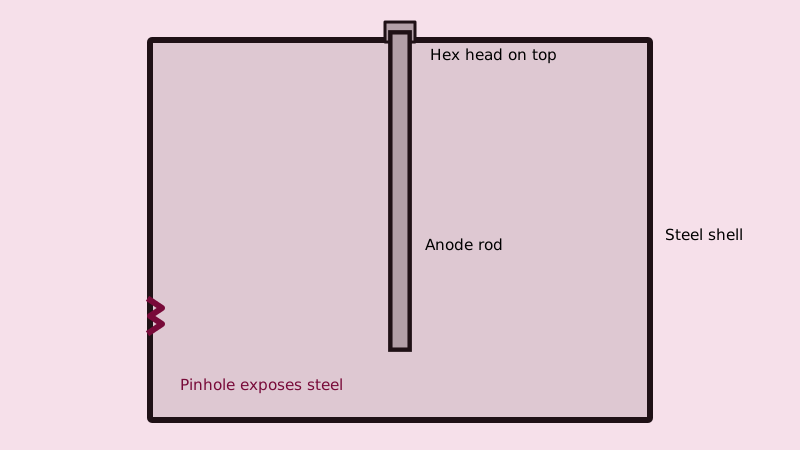
Rust wants your tank. The anode rod stands in its way, a bar of softer metal that sacrifices itself so the steel shell can last. Once the bar is gone, the shell is next. Changing it is a modest job. For the broader picture of tank care, start at water heater repair.
Which parts of the tank does the rod shield?
Everything made of steel inside the tank. Hot water, minerals and oxygen set up a tiny electrical circuit that eats metal, and the rod is built from magnesium, aluminum or a zinc and aluminum mix so it is the preferred victim. Thin or missing rod means the glass lining's pinholes start to rust.
Powered rods are a fourth kind. They use a trickle of current rather than sacrificing metal, so they last far longer, and they cost more. Which type fits depends on the water chemistry in your house, and examining the old rod once it is out shows how fast yours is wearing.
When is a rod finished?
Look at it. A rod that is fat with scattered bare spots has years left. A rod that has shrunk to a wire, or shows a bright steel core along most of its length, is done. Brown hot water, a taste like coins, ticking noises and a sulfur smell hint at trouble without proving it.
A first look at any age is smart, since plenty of tanks never get one. After that, glance again every year or two, and follow the maker's manual. Tanks at ten years or more deserve a skeptical eye. Bob Vila says basic tank models are expected to last 8 to 12 years.
What will a new rod cost me?
Parts run roughly $20 to $50 per Bob Vila, with the labor on top. A tank flush is a natural pairing at the same visit; ask what it adds. Rely on the written quote, since it lists parts, time and extras line by line.
What drives the total:
- Headroom. A closet heater with a low ceiling above it calls for a rod made in jointed sections that bends to fit.
- Seizure. Threads fused by years of heat take more effort and occasionally get damaged.
- Extras. A flush, a relief valve test and a burner or element check add to a rod-only visit.
How does the swap go?
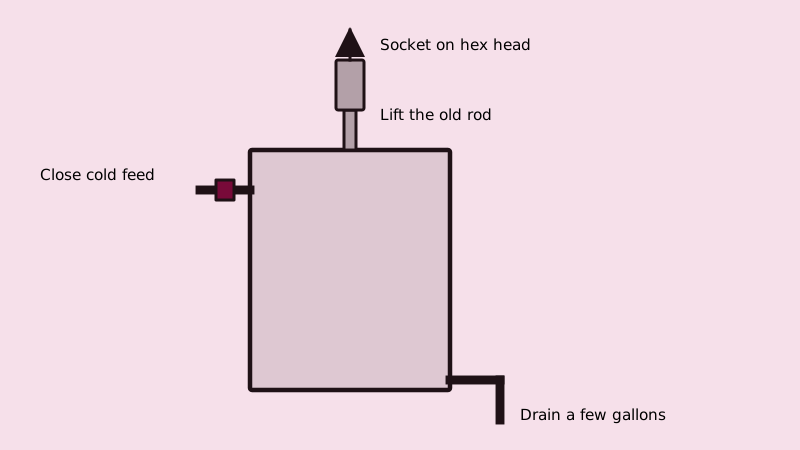
Power or gas goes off, the cold feed closes, a few gallons drain out, and a long socket loosens the hex head on top. Out comes the old rod. Thread sealant goes on the new one, it goes in, then the tank refills with one hot faucet left running to push out air before heat comes back.
Homeowners run into two snags. A factory impact wrench can leave the rod welded in place for practical purposes. And the appliance combines scalding water with gas or high-amp wiring. Stay with the owner's manual, and call a plumber whenever gas piping, a flue or a stuck fitting is involved.
Which rod material should I pick?
Start with what the heater maker supplies, then adjust for symptoms. Magnesium protects best and is the usual factory choice, but it can feed sulfur odors. Aluminum and zinc-aluminum rods resist that smell and tend to hold up in harder water.
Powered rods cost more up front and need an electrical connection. They pay off where a heater is otherwise healthy, the access is awkward, and nobody wants to open the tank every couple of years. Ask the plumber for a recommendation tied to your tank model and your water, and keep the old rod to show what wore out.
Is a rod worth it, or is the tank past saving?
A younger tank, dry underneath, with a worn rod, is a good candidate for a rod. An old tank that weeps at the base, has rust streaks at the seams, or was already pumping out brown water is a candidate for retirement. A leak in the steel shell cannot be patched.
Run the numbers before deciding. Set the rod, flush and any other repair next to the full price of a new unit in hot water heater replacement and water heater replacement cost. Not sure of the age? Your heater's build date is encoded in the label serial number, and our water heater lifespan guide shows how to read it.
Does Whittier water change the rod's lifespan?
Local chemistry plays a part. Whittier's 2025 consumer confidence report gives well-water hardness of 250 mg/L on average, firmly in the hard range. Scale gathers on elements and sediment piles up on the tank bottom, so flushing at rod time is wise.
Chemistry affects the rod too, and sodium-rich softened water is known to consume sacrificial rods faster. Water suppliers vary by street here, since Whittier mixes city service with other companies. If a softener runs in your house, tell the plumber, and plan on checking the rod more often than usual.
Does the city care if I only change the rod?
Not for upkeep of this kind. Installing a whole replacement heater is different and needs a permit, which water heater permit rules explains. Pico Rivera, for one, lists same-location water heater change-outs among its express permit types, so ask your city whether a faster route exists.
When unsure, phone the city. Whittier's building counter is reachable at (562) 567-9320. A rod swap stays under the dollar line where state contractor licensing begins, while anything needing a permit must be done by a contractor whose license the state recognizes.
Common questions
Do tankless heaters use these rods too?
No, since there is no tank to protect. Scale is the main enemy of tankless units, and a plumber handles that with a descaling flush. On a tank model, look for a hex bolt head on the top of the heater, or sometimes in the hot outlet nipple.
Why does my hot water smell like eggs?
Certain bacteria thrive in warm tank water and turn a magnesium rod's byproducts into sulfur gas. Plumbers sometimes switch to an aluminum, zinc-aluminum or powered rod and flush the tank. Never raise the thermostat past the maker's limit to kill odor, because scalding is a serious hazard.
What if the rod refuses to budge?
Stop there. Cheater bars and heat can crack the fitting or shift the heater on its connections. A plumber brings the right tools and can judge if the tank deserves saving. A seized rod on an aging tank is often the cue to replace the heater.
How do I request this service?
Give us the make, the age from the label and any signs of rust using the price request page, and the written estimate we arrange will itemize the rod, the labor and any tank flush. Mention how hot the water runs and whether a softener is installed, since both affect the plan.
For the wider picture, start with Rio Hondo Plumbing plumber.