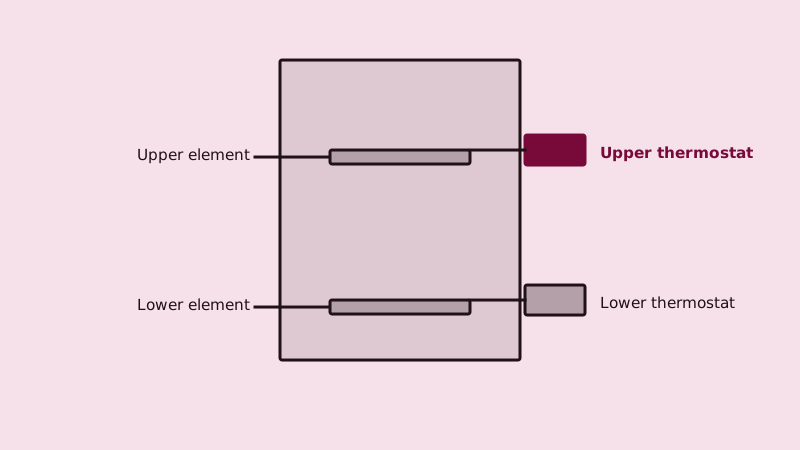
An electric water heater in trouble can swallow far more electricity than a healthy one, and your bill is where it shows first. A thermostat stuck on, a shorted element, or a leak that makes the tank reheat fresh water all push usage up. A gas tank rarely touches your electric bill. For the wider range of hot water problems, see water heater repair, then use the checks below.
How can a faulty water heater push my electric bill up?
Four faults do most of the damage. A thermostat that fails closed leaves an element energized after the water is hot. An element crusted with scale needs more time for the same warmth. A leaking tank forces constant reheating of new water. A recirculation pump or timer stuck on keeps drawing power around the clock.
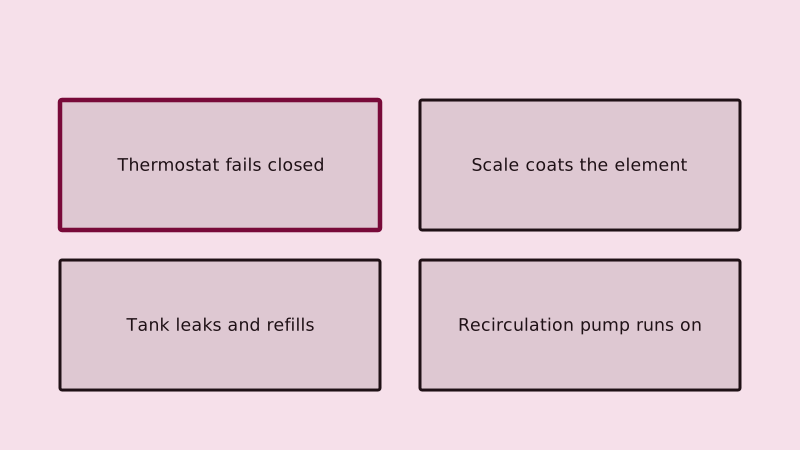
Each has its own tell. Scalding water points at the thermostat. A bill that crept up over months points at scale. A damp floor under the tank points at a leak. A pump humming at 3 a.m. announces itself. None of these heals alone, and each is usually cheaper to fix than the extra power costs over a year or two.
Does a gas tank matter to the electric bill?
Barely. Gas tanks heat with a burner fed by SoCalGas, which supplies gas across Whittier, Downey, Norwalk, Pico Rivera and nearby cities. Electricity goes only to an igniter, a control board or, on some models, a power-vent fan, which is tiny next to an electric element.
If the electric bill jumped and the heater runs on gas, look elsewhere first: an air conditioner, a pool pump, a space heater, an aging refrigerator or a new appliance. A power-vent fan that never shuts off is a rare exception worth mentioning to a plumber. A higher water bill is another problem, handled in unexplained high water bills.
How much electricity can a stuck element use?
An electric tank element is a resistance heater, and many are rated near 4,500 watts, so read the label on yours. Running nonstop, 4,500 watts uses 108 kilowatt-hours in a day (4.5 kilowatts times 24 hours). Multiply by your utility's rate to see what a full day of continuous heating would add.
A healthy heater runs in bursts, only when hot water is drawn or standby heat is lost. That is why a stuck-on element stands out so clearly on a smart meter or an hourly usage chart from your utility. Two elements usually share the work in a tank, one upper and one lower, so a single failed unit often shows as lukewarm water as well as a bill increase.
How can I find out if the heater is the cause?
Compare a day with the heater's breaker on against a day with it off, using your utility's hourly usage data if you have it. A large gap proves the heater is a heavy user. Also look for pooled water and listen for a hum.
Also look at the temperature setting. Many tanks ship near 120 degrees Fahrenheit, and a dial turned higher costs more in power and raises the scald risk. Flip the heater's breaker off before you open any access panel; live terminals inside an electric heater can shock. If you are not comfortable, stop and book a visit through the price request form.
Could a leak be the real culprit?
Yes. A weeping tank, a leaky relief valve or a bad fitting lets hot water escape, and the heater replaces it with cold water it must heat again. The water bill rises too. EPA puts the household average at over 9,300 gallons a year escaping through leaks; if the leak is hot, you also pay to heat what escapes.
Inspect the relief valve's drain pipe, the foot of the tank and the supply fittings. The guide on a leaking water heater explains what to do. Dripping taps are a cousin of this problem, discussed in faucet leaks and the water bill.
What do electric heater repairs cost?
Bob Vila's repair guide spans $221 to $964 overall in its national survey: a thermostat runs $150 to $200, an element up to $300, parts and labor together. For a failed tank, the replacement guide shows an electric replacement at $600 on the low side and $3,500 on the high side, labor included.
Age decides. A fresh element in a tank that is six years old is money well spent; a second repair in a tank that is nearly done is not. Part details: element swaps. Figures are a guide only.
When does replacement make more sense?
Pick a new tank if the body leaks, if repairs near half the price of new, or if the unit is aged and wasteful. Newer insulation loses less standby heat. Hard water matters here too: Whittier's 2025 city report shows hardness near 14.6 grains per gallon, enough to scale elements.
Lifespans quoted by manufacturers and installers differ, so we do not give a single figure. The signs of age are collected in the replacement timing guide. The home page shows more of what we handle.
Common questions
Can a working heater still inflate the bill?
Yes. A heater can work and still waste power: a high temperature setting, a poorly insulated tank, long uninsulated pipe runs, or an old unit that loses heat quickly all raise bills. A tank in an unheated garage works harder in cold weather. A professional can check insulation, settings and element condition.
What shows that an element is stuck on?
A stuck element keeps heating after the water reaches temperature, so water gets very hot, the relief valve may drip, and the power meter shows constant draw. With the breaker off, an electrician or plumber can test the element with a meter. Do not test live terminals yourself.
Is it smart to switch the heater off while I travel?
For a short trip, lowering the thermostat or using a vacation setting, if your unit has one, can save power. For longer absences, turning the breaker off is an option. Tanks should not be drained or left off in freezing weather. Check the manual and relight or reset exactly as directed.
Does repairing an old electric tank pay off?
Part and age decide. A thermostat or element on a tank with years left is sensible. A tank with a body leak cannot be mended. When a repair would eat nearly half the price of a new tank, buy the tank. Ask for both prices on paper.