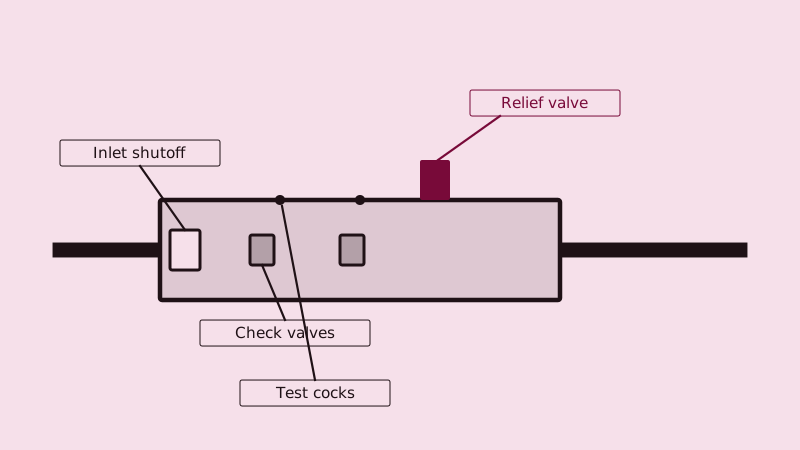
Los Angeles County Public Works says a backflow test usually costs between $75 and $150 per device, and most tests take under 30 minutes. A published California price guide shows a wider band of $75 through $250 for a test, with installations and repairs priced separately. Gas safety and code topics sit under gas plumbing and code. For a visit, use the price request form.
What does a residential backflow test cost?
Expect about $75 through $150 per device from county guidance, with some published guides running higher, up to $250. A tester who has several devices to check at one visit may charge less per device. The test takes under 30 minutes, but the price varies by tester, device type and how easy it is to reach.
Look at what the fee includes. Does it cover filling out and filing the report with your water provider, or is that extra? Are re-tests included if the device fails? Parts and repairs are almost always billed on top. Some water districts add a separate report fee. Ask for the whole price in writing, and for the date by which the report must reach the provider.
Does my home need a backflow device at all?
Not every home does. Devices are typically required for higher-risk settings: irrigation systems, pools, fire sprinklers, medical facilities, restaurants and businesses that use chemicals. Whether a given property needs one depends on state rules and your water provider. The provider's notice or your account will tell you.
A lawn sprinkler system is the usual reason a house in Whittier, Downey, Norwalk or Pico Rivera ends up with a device. Water providers differ by street, so call the one named on your bill. Whittier's city water customer service is (562) 567-9530. If a provider has sent a test notice, you need to arrange the test. Commercial properties are covered in commercial backflow testing.
Who is allowed to do the test?
The customer must hire a tester the water provider accepts, give them the test form, and make sure the completed form reaches the provider before the due date. Los Angeles County's page says only a tester qualified under state rules can do the inspection, and also points to a list kept by the County Department of Public Health.
Those two descriptions differ, so confirm with your own provider which list it uses. A plumber who does testing should be able to show you proof. Do not accept a test from someone who cannot say how it will be filed. For how the test works, see how backflow testing is done and backflow prevention testing.
What happens if the device fails the test?
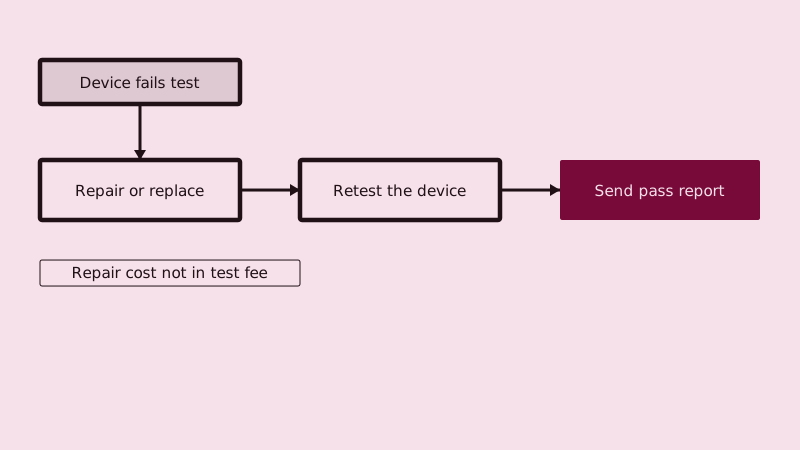
A failed device must be repaired or replaced and then retested, and the provider needs a passing report. Repair costs are not included in the test fee. Typical causes are worn seals, a fouled check valve or debris, and a kit rebuild can often fix them. An old or damaged device may need replacing.
Published figures for installation, from a California price guide, are about $300 through $700 for a residential dual check valve, $500 through $1,200 for a pressure vacuum breaker, and $1,000 through $3,500 for a reduced pressure zone device, with replacement of a residential unit at $300 through $1,200. A protective cage adds $100 through $300, and permits $50 through $200. Treat all of these as guides, and compare written quotes.
What if I miss the test deadline?
Los Angeles County says customers who do not arrange a test before the due date receive a water shutoff notice, and water service can be ended until the test is done and the form is submitted. Check your notice for the date and book early, because a failed device needs time for repair.
The cheapest approach is to schedule the test as soon as the notice arrives, and ask the tester to file the form. If you have moved into a home with an old device, ask the seller or provider for the last test date. If the device is not working or has been removed, tell the provider before it becomes a violation.
Do I need a permit or a contractor to install or move a device?
Installing, replacing or relocating a backflow device is plumbing work, and local rules vary. California requires a contractor license for work of $1,000 or more in labor and materials, and for any job that needs a permit. Ask your building office or water provider what applies before you start.
Whittier's Building and Safety Division is at (562) 567-9320. Other cities in our area have their own offices. A device must be installed to the provider's rules, with clearances, orientation and height specified. A device in the wrong spot can fail a test even if it works. See also what an inspection costs and pressure regulator replacement, since high pressure can strain devices. The home page lists the other work we arrange.
Common questions
How often must a backflow device be tested?
Once a year, according to Los Angeles County Public Works, which says state law requires this. Your water provider sets the due date and sends the notice. A new or repaired device is tested at once. Keep the report copy, so you can show it if the provider asks.
What should I ask before I hire someone to test my device?
Ask for the total price, including the report filing, and whether a re-test is included. Ask whether the tester is on your provider's approved list. Ask what happens if the device fails, how long repairs take, and whether parts are priced up front. Get it in writing.
Can I test the device myself?
No, not for the official test. The provider needs a report from an accepted tester. A homeowner can look for leaks, damage and a missing cage, and keep the area clear, but the test uses calibrated gauges and a formal report. Book a tester instead.
Does a sprinkler system always need a backflow device?
Irrigation is one of the typical settings where a device is required, and the device protects the public supply from fertilizer and standing water. The details depend on the provider and local rules. If you have a sprinkler system and no device, ask your provider whether one is required.