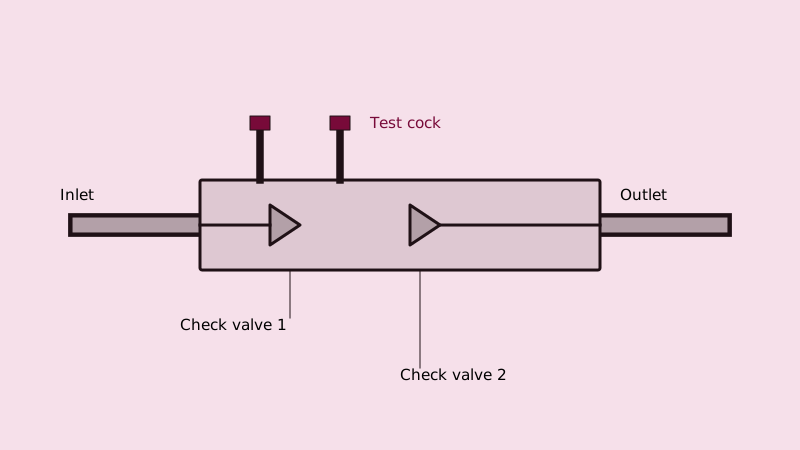
Think of a one-way gate between the sprinkler or shop plumbing and the pipes you drink from. Testing shows it still closes. California's Title 17 makes each public water supplier run a cross-connection program, and the assemblies it covers get tested at installation and every year after that. Related rules sit on the permits, codes and inspections page; book from the home page.
What exactly is a backflow test?
A short pressure check, performed with a calibrated differential gauge. The tester closes the shutoffs, hooks hoses to the little test cocks on the body, then reads how each internal check valve seals and when the relief port or air inlet opens as designed. The result goes on a report sent to the water supplier.
Different devices get different readings:
- Pressure vacuum breaker (PVB): the usual choice on sprinkler lines; the air inlet should pop open when pressure falls.
- Double check assembly: a pair of check valves, one after the other, each judged on how tightly it seals.
- Reduced pressure assembly: a relief port sits between two checks, which adds measurements; it guards the higher-hazard connections.
- Hose bib vacuum breaker: the small screw-on cap on an outdoor spigot. It is not tested; if it is damaged or missing, replace it.
Who can perform the test, and can you do it yourself?
No. California expects a tester carrying the proper backflow credential, and the supplier files the report. An owner with a gauge kit and no credential cannot produce a report the supplier will accept. The sensible plan is to hire a tester and be ready when they arrive.
A few suppliers maintain an approved-tester roster and mail the notice themselves, so read the letter or phone before booking anyone. In Whittier the city's water customer service line is (562) 567-9530; the city supplies drinking water from groundwater, while other companies serve parts of the area, so confirm who your supplier is. A contractor who also does repairs saves a second trip if the device fails.
Which devices at my property need yearly testing?
Anything that could let non-potable water reach the drinking supply: lawn irrigation connected to house plumbing, fire sprinkler lines, pools and spas filled by a hard-piped line, booster pumps, and many commercial uses. A typical house with sprinklers has one assembly to test. Your supplier decides what applies, based on the hazard at your address.
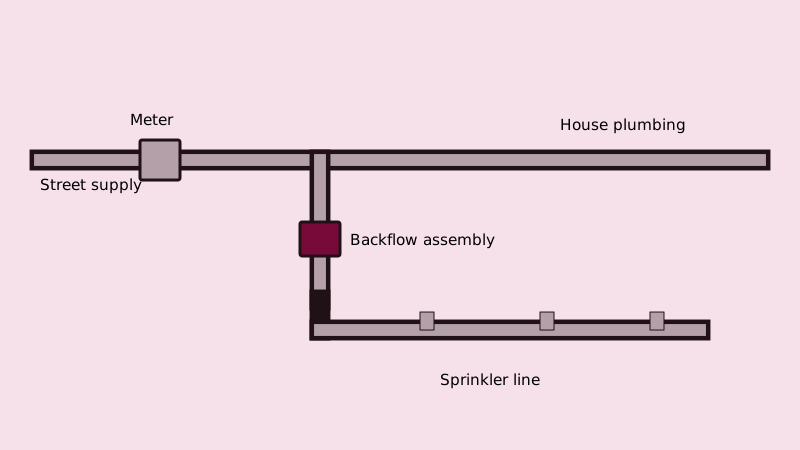
Typical examples:
- A sprinkler system with a valve box or a raised brass device near the house.
- A water line feeding a pool or fountain.
- A shop, restaurant or industrial building with chemicals, dishwashing or boilers (see commercial backflow testing).
- A fire sprinkler riser in a multi-unit building.
Not certain you own one? The supplier can say whether your address is listed, or a plumber can walk the property. Our backflow prevention testing page covers the programs in more detail.
How do you prepare for the visit?
Free up access to the assembly by pulling weeds and moving boxes, and point the tester to the water and irrigation shutoffs. Leave the sprinklers off while the test runs, and bring the notice with its reference number. Expect a brief interruption at that device.
Checklist:
- Locate the assembly. In most yards it is a valve cluster near the meter or the house wall.
- Clear a space around it so the tester can attach test hoses.
- Read off the maker, model and serial stamped into the body.
- Keep your account number and the notice handy.
- Tell household members when the water will go off.
What happens when the device passes, and what if it fails?
A pass gets a signed report filed with the supplier, and you are set until the next annual date. A failure means the assembly needs cleaning, new rubber parts or replacement, after which it is tested again. Suppliers can shut off service for noncompliance under Title 17, so do not let a failed test sit.
Most failures come from debris on a check seat or worn rubber, and a good tester can often clean or rebuild a valve on the spot. Replacement needs the right size and type for the hazard, and the work may require a permit from the city, so ask. In Whittier the Building & Safety Division, (562) 567-9320, handles permits. Whoever replaces a device under permit must hold a California contractor license; the CSLB website lets you confirm it.
What should a test be priced at?
Device count, size and any repairs move the figure, and no verified Whittier price is available to quote. Find out whether report filing is built into the fee, and what a rebuild would cost on top. Line-by-line pricing is on the backflow device testing cost page.
A bargain test can balloon into an expensive replacement. Get the failed reading and the needed part on paper, and price a second option if the repair is large. Our backflow testing services page explains the scope of the work we arrange.
Common questions
Will it take the whole morning?
For one residential device the test itself usually takes around 15 to 30 minutes once the tester is set up. A failed assembly adds time for cleaning or repair and a second test. Expect water to be off at that device only for the duration of the work.
How frequently must a device be retested?
Under Title 17 in California, once at installation and no less than yearly afterward. The supplier picks the due date and mails the notice, and risky sites can face more frequent checks. Keep the previous report so you can see when the next one is due.
Should an adult be there?
Someone has to open access to the assembly and accept a short shutoff. If a gate is locked or the device is indoors, arrange entry in advance. A few testers and suppliers will not start unless an adult is on site, so ask when you book. Certain testers or suppliers insist on an adult being there.
What if I never received a notice from my water supplier?
Phone the supplier and ask if a device is on file for your address. Missing the notice does not cancel the duty, and an unrecorded device may still require testing. Having the supplier confirm your due date by letter or email avoids problems later.
Is a hose bib vacuum breaker the same as a backflow assembly?
No. The screw-on vacuum breaker on a spigot is a simple protective device and is not field tested. A cracked or absent one should simply be swapped. A testable assembly is a larger valve body with test cocks, usually installed on an irrigation, pool or fire line.