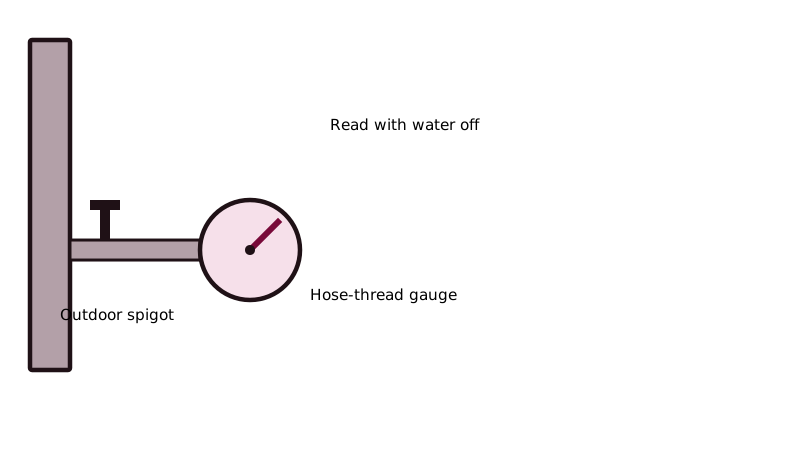
Screw on a pressure gauge, loosen the locknut, then rotate the adjusting screw a quarter turn at a time. Clockwise pushes the pressure up; the other way brings it down. Read the dial between turns. If the screw spins with no effect, the valve is worn and it is a replacement job. For the broader view of weak or strong flow, begin at the low water pressure page.
What job does the regulator do in a house?
Picture a spring-loaded valve sitting on the incoming line, trimming the street's pressure to a calmer number inside your walls. Without one, pressure that arrives too high rattles pipes, wears out washers and strains the water heater. With one, the flow from every tap evens out.
A car's speed limiter is a fair comparison. Water enters at whatever the utility delivers, passes through a diaphragm that throttles it, and leaves at the set value. Because it is a mechanical part, it drifts as the spring weakens and mineral grit builds around the seat. That drift is why one house can have good pressure for years and then suddenly feel wrong.
Most single-family homes in this area have one, though older ones may not. Can't spot yours? The notes on finding the regulator list the usual hiding places.
How do I measure pressure before touching the screw?
Pick up a hose-thread gauge, cheap at any hardware aisle, screw it onto an exterior spigot, confirm that every appliance and fixture is idle, then read the dial. Any steady reading above 80 psi is over the California Plumbing Code limit in section 608.2, and many people aim well under that.
Details that matter:
- Test with the washing machine, dishwasher and sprinklers off, so nothing is drawing water.
- Read it late at night too. Street pressure tends to creep up once the neighborhood stops using water.
- Note the reading before you touch anything, so you can undo a mistake.
A gauge that shows a very high needle but a faucet that barely flows tells a different story: the regulator may be fine and the clog may be downstream. The causes of weak flow get their own treatment in why a house loses pressure.
How do I turn the adjusting screw?
Look for a bell-shaped brass body near the main shutoff: at the wall where the pipe comes in, or inside a box by the meter. Back the locknut off a little. Now work the screw: clockwise for more pressure, counterclockwise for less, in small quarter-turn steps with the gauge in view.
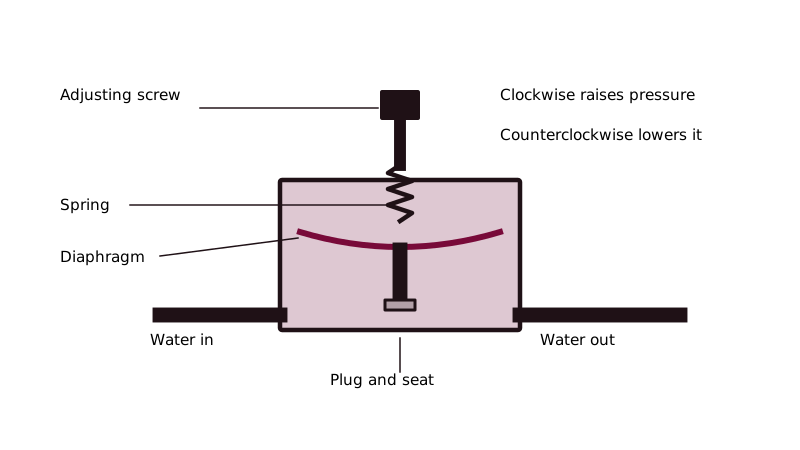
Practical order:
- Open one faucet slightly so the valve is passing water as you adjust.
- Make one quarter turn, shut the faucet, and let the gauge settle. It reacts slowly.
- Repeat until the needle sits where you want it.
- Tighten the locknut so the setting cannot creep.
- Recheck the next morning.
Some models use a bolt head and some use a T-handle; the idea is the same. A screw seized by corrosion should not be forced. A snapped stem means the whole valve comes out.
Where should the pressure end up?
Many homes run comfortably in the 50s to low 60s psi, and fixtures and appliances are generally designed for that kind of range. Going higher gives a stronger shower but shortens the life of hoses, valves and water-heater parts. The plumbing code tops out at 80 psi; your comfort and the labels on your fixtures decide the rest.
Raised it for a weak shower and now the pipes bang or a toilet runs on? Either you overshot or something inside has worn. A banging sound deserves its own diagnosis, and what water hammer sounds like and why explains it.
Do regulators go bad, and how do I know mine has?
Yes. Springs weaken and diaphragms crack, and sediment sticks the seat. Signs include a gauge that climbs overnight, pressure that swings from one day to the next, a screw that no longer changes anything, or water hammer that arrives out of nowhere. Regulators often last a decade or more, but there is no fixed date.
Whittier's city water measured 250 mg/L total hardness in 2025, a level the USGS ranks as very hard. Mineral grit can accumulate on a valve seat in hard water, so a regulator that sticks is not unusual. If a plumber replaces it, ask whether the new one should sit above a strainer or have a union fitting so the next swap is quick.
Is swapping the regulator a home project?
Sometimes. Because the job cuts into the main line, plenty of owners pass it along. The water must be shut at the meter or street valve, pipe cut and new fittings or unions installed, and every joint watched for weeping once pressure returns. Ask the City of Whittier Building and Safety Division at (562) 567-9320 whether your swap needs a permit.
Step-by-step detail lives on swapping out a regulator. Budget factors are laid out under regulator installation costs.
Also remember thermal expansion. A regulator can create a closed plumbing system, and a closed system can push pressure up when the water heater runs, a common reason a tank to absorb the swelling is often needed. Raise it with the plumber.
When is this a plumber's job, and what should I tell them?
Reach out if the needle keeps climbing after an adjustment, the screw does nothing, the valve drips, or the regulator is nowhere to be found. Put your gauge reading into the price request form. A plumber nearby makes the trip, and expect the price in writing beforehand.
Have these ready:
- The gauge reading and where you took it.
- Any noises (banging, hissing).
- Whether the water was recently shut off or the street had work done.
- Photos of the main valve area.
Other services are listed on the Rio Hondo Plumbing front page.
Common questions
Which way do I turn a pressure regulator to increase pressure?
Clockwise on the adjusting bolt gives you more pressure; counterclockwise gives less. Free the locknut first, then go in quarter turns and glance at the gauge between each. The needle is slow, so count to ten before the next turn.
Can I adjust a regulator without a gauge?
You can, but you would be guessing. A faucet feels strong or weak differently than a dial reads, and you could push pressure above the 80 psi limit without knowing. A gauge costs little and shows you what the pipes actually feel.
Does a shower head or hose have its own regulator?
Some do. Small flow restrictors sit inside shower heads, and a separate screw-on regulator exists for garden hoses and pumps. These tame flow at one fixture. They do not replace the house regulator, which protects the whole system from the main.
Why is my pressure high even with a regulator?
The valve may have failed open, or thermal expansion is pushing pressure up after the water heater cycles. A gauge that climbs when nothing is running points to a failed regulator. A reading that rises only after the heater fires points toward expansion.
Is it normal for the regulator to make noise?
A faint hum can be normal, but chattering, buzzing or banging is not. The usual causes are a failing seat, loose internals or pressure set too high. Ease the setting down a notch and listen; if the noise persists, have a plumber look.
References
- California Plumbing Code, section 608.2 (80 psi limit)
- USGS, Hardness of water
- City of Whittier Building and Safety Division