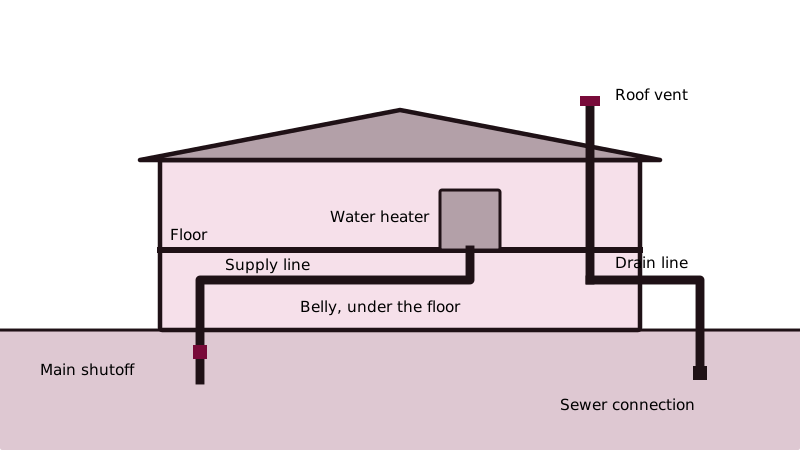
Mobile home plumbing is ordinary plumbing in an unusual package: a supply line that enters from the lot, drain lines that run under the floor to a connection at the pad, and vents that exit through the roof. Winterizing mostly means protecting the exposed belly pipes from a freeze. The home page lists the plumbing services we arrange for homes of every type across southeast LA County.
How is a mobile home plumbing system laid out?
Cold water arrives at a riser near the home's edge, passes a shutoff and often a pressure regulator, then runs through the belly (the space under the floor) to the kitchen, bath and water heater. Drains collect in larger pipes under the floor and leave through a single sewer connection. Vents rise through the roof.
If you want a schematic, trace it yourself. Draw the floor plan, mark each fixture, then follow the supply and drain lines from the crawl space access panel. Mark the main valve, the heater, every trap and each spot where a line crosses the belly. A sketch saves a plumber time, and it saves you if something fails at night.
Federal rules govern how the home itself is built: the HUD code, 24 CFR Part 3280, has a plumbing subpart. California's plumbing rules in title 24 apply to later alterations, according to the state housing agency, HCD. Most owners never read either, but they explain why some parts, such as certain vents and fixtures, cannot simply be swapped for whatever fits.
What does the roof vent do, and how do you check it?
Vent stacks admit air so drains run smoothly, and they release sewer gas above the roof. A cracked or loose vent cap lets rain in, a blocked one slows drains, and a missing one lets pests or leaves in. Inspect from a ladder on a dry day, or scan with binoculars from the ground.
A struggling vent shows up as several slow drains, a gurgle when the washer empties, or a sewer odor indoors. Birds, leaves and nesting debris are common culprits. Some homes also use mechanical auto vents under a sink; they wear out, and a stuck one can cause a gurgling drain or odor.
Replacing a cap is a modest job. Anything that changes the vent layout counts as altering the plumbing system and may require an HCD permit; that agency has authority over alterations to mobilehomes in many cases (confirm with HCD and your park whether HCD or a local agency handles yours). Do not climb on a wet or old roof; hire someone if the roof feels spongy.
How do you winterize mobile home plumbing before a freeze?
Wrap exposed pipes, seal skirting gaps, let one tap trickle on the coldest night, and be sure you can find the main valve. A vacant home is different: close the supply, empty the lines and heater, and pour non-toxic plumbing antifreeze into the traps. Heat tape needs to be installed exactly as its instructions say.
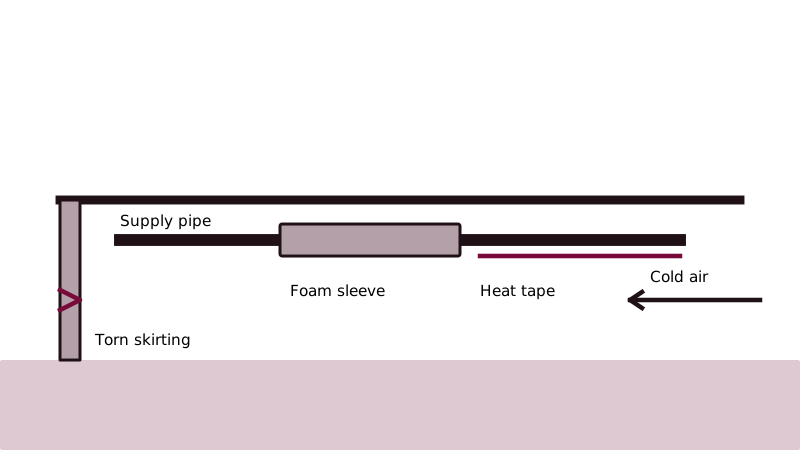
Freezes are not common in the Whittier area, but they do happen on clear winter nights, and a mobile home loses heat fast through the floor. Pipes in the belly and outside near the pad take the first hit.
Practical steps:
- Find and test the main shutoff so you can close it in seconds.
- Fix torn skirting or belly wrap and close vents on freezing nights.
- Wrap exposed supply pipes with foam sleeves; use thermostat-controlled heat tape only per its listing.
- Leave cabinet doors open under sinks that back onto outside walls during a freeze.
- Disconnect garden hoses and cover outdoor spigots.
- When a freeze is forecast, keep the tap furthest from the supply dripping overnight.
If a pipe does freeze, close the main and open the faucet so thawing water has somewhere to go. Warm it gradually with a hair dryer; never use a torch. Check for splits before you restore the water. A burst is easier to catch at the moment of thaw. The signs of a split are listed in how to know if a pipe burst.
What does a routine plumbing check cover on a mobile home?
A routine check once or twice a year covers under-sink leaks, supply connections, the water heater, shutoff valves, vents and the pipes in the belly. A maintenance visit is a plumber looking for small failures before they become big ones, and tightening, replacing and flushing what is worn.
Do it yourself where you can: run your hand along supply lines and fittings under each sink, look for green crust or white scale, test shutoff valves, and check that the belly wrap is intact. Flush the water heater to remove sediment and test the pressure relief valve per the manufacturer's directions. Hard water, which is typical here, builds scale quickly.
Keep a list. Supply line age, heater age and any past repairs belong in one note. If the supply plumbing is gray plastic polybutylene, a material found in some homes from the 1980s and 1990s, read polybutylene pipe replacement because it can fail without warning.
Which fixes are yours and which need a permit?
Replacing a washer, trap, vent cap or faucet is homeowner work. Changing drain, vent or water lines, adding fixtures or touching gas piping is regulated. HCD's guidance says alterations must follow federal HUD rules and California's title 24, and permits are issued by HCD or, in some parks, a local enforcement agency. Gas work needs a contractor.
For gas, SoCalGas serves the cities in this area. Smell gas? Exit the home immediately. Once outside, SoCalGas takes the call on 1-800-427-2200, and 911 handles anyone in danger. Skip lighters, switches and indoor phones. Appliance connectors, regulators and meter leaks are for professionals only.
On the licensing side, California wants a contractor license once labor and materials reach $1,000, or whenever a permit applies. For related plumbing questions, see mobile home plumbing inspection, how to install plumbing under a mobile home and replacing a mobile home water heater.
Ready for a second pair of eyes? A price request gets a local plumber to your door.
Common questions
Do mobile home pipes freeze in Southern California?
They can, though it is not frequent. Cold, clear nights expose belly pipes and spigots, because the floor loses heat quickly. A few precautions, such as sealed skirting, foam sleeves and a dripping faucet on a forecast freeze, handle most risk without much cost.
What do you put in the traps when a mobile home sits empty?
A little RV-type antifreeze labeled non-toxic in each trap keeps the water from freezing and splitting it. Close the supply and drain the lines and heater first. Automotive antifreeze is poisonous and never belongs in a drain. If you are unsure which product is safe for plumbing, ask at the store.
Is heat tape safe on mobile home pipes?
Yes, with care. Use a listed, thermostat-controlled product, follow the instructions about contact with plastic pipe and insulation, and never overlap the tape. Check it each autumn for damage. If you are unsure of the pipe material, ask a plumber before wrapping it.
Where do you find the shutoff valve?
Begin at the spot where the supply pipe comes up from the lot, usually near a corner of the home. A second valve sometimes sits at the heater. Turn each one now, so a stiff handle never surprises you during a leak, and tag it.
How often should a plumber check a mobile home?
Once a year is a sensible pace for an older home, and after any freeze or leak. Between visits, check under sinks and around the water heater monthly. A plumber can spot corrosion, loose fittings and vent trouble that are hard to see.
References
- California HCD, Mobilehome Park Utility Upgrade Program Installation and Inspection Guidelines (HCD MP 400, rev. 07/24): governing codes, gas piping
- U.S. HUD, Manufactured Home Construction and Safety Standards, 24 CFR Part 3280 (as referenced in HCD MP 400)
- SoCalGas, cities served