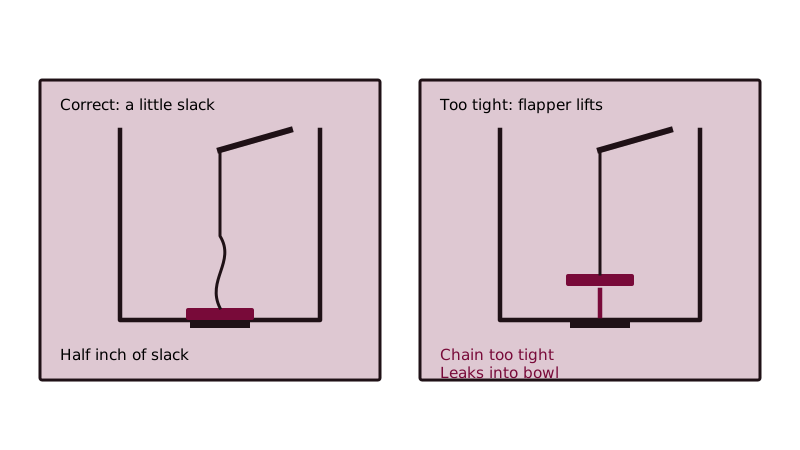
A leaking flapper is a ten-minute, low-cost repair. Close the supply, empty the tank, detach the worn stopper, attach a matching one, leave the lift chain just a touch loose, then reopen the water. For other fixes inside the tank, the toilet repair section lists the rest.
How can you prove the flapper is the culprit?
Squeeze several drops of dye into the tank, leave it alone for ten minutes without flushing, and look at the bowl. Any tint there means the stopper fails to seal. Other giveaways are a hiss from the tank, a refill with nobody having flushed, or a flush that fires at 3 a.m. without a hand on the lever.
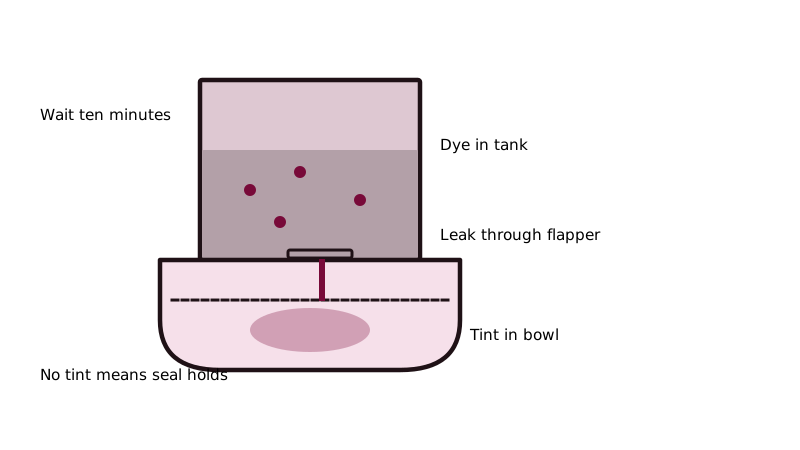
The EPA recommends the same dye check and says a worn flapper can trigger self-flushing. It also advises inspecting the flapper now and then and changing it at least every five years. Flush when you are done, or the tank stays stained.
Another cue sits inside the tank. A level that sinks slowly while the fill valve cycles on and off means water is escaping past the seal. A level high enough to run into the overflow tube points at the fill valve; repairing a toilet fill valve picks up from there.
What are the steps for a swap?
Turn off the valve behind the bowl, flush to drain the tank, sponge up what remains, and unhook the chain from the handle arm. Lift the old stopper away, scrub the seat, fit the new stopper, reattach the chain with about a half inch of play, and reopen the valve for a trial flush.
Three details trip people up:
- Seat prep. Wipe the rim until it feels glassy, using a damp rag or a soft pad. Grit under the rubber beats even a brand-new stopper.
- Chain length. Spare links can fold beneath the stopper and prop it open, so clip or snip them.
- Retest. Watch the stopper settle after a flush, and repeat the dye check an hour later.
Tools are minimal: a sponge, maybe pliers. A balky or dripping shutoff valve is best replaced by a plumber; see toilet repair shut-off valve.
Which replacement part fits?
The flush valve decides it, not the brand on the bowl. Outlets are usually two or three inches wide, and stoppers come in both sizes. Adjustable universal ones suit many tanks. Carry the old part to the store and look for a model stamp inside the tank.
Photograph the assembly before touching it. A few stoppers clip onto small pegs on the overflow tube, while others slide around it like a collar. Newer toilets may use a canister-style valve, needing a different part entirely. A cracked or weeping flush valve base is a bigger repair, outlined in replacing a flush valve without removing the tank.
Material matters a little. Rubber suits most homes; silicone tolerates chlorine better. Pass on stiff bargain parts, because the seal is the whole point.
Why do flappers wear out?
The stopper rises with the handle, lets the tank drain, then falls back over the opening. Rubber hardens, curls and grows a slimy film over time. Chlorine tablets can hasten the decline, and mineral crust roughens the seat it presses against. Whittier averages roughly 250 mg/L of hardness, so crust is a reasonable suspect here.
Losses add up silently. The EPA's figure for leaks in a typical home is above 9,300 gallons yearly, and toilets are a regular source. Because nobody hears the trickle, it can continue for months.
Mechanical culprits exist too: a lift chain pulled taut keeps the stopper cracked open, while one with too much slack can loop under it. A chip in the seat or a split flush valve also does it. Inspect before shopping.
What if a new stopper does not stop the running?
Check four things in order: chain, seat, overflow tube, fill valve. Any of a chipped seat, a cracked tube, a high float or a worn valve can keep water moving. When the level overtops the tube, lowering the float or changing the valve normally solves it.
Toilet bowl running: how to fix gives the sequence in more detail, and repairing the toilet overflow tube handles a split tube. A puddle at the foot of the bowl is a separate failure, dealt with in repairing a toilet leak.
Know the limits. A cracked tank, a weeping base or a seized flush valve can cost more to patch than to replace, and a plumber can supply either a new valve or a new toilet.
Rather not do it yourself? A price request gets a local plumber scheduled. For scale, a flapper swap is far under California's $1,000 contractor-license threshold. Browse other work on the home page.
Common questions
What is a flapper's normal lifespan?
The EPA wants it inspected regularly and replaced at least every five years. Hard water or tank tablets can shorten that further. If the toilet runs, refills on its own or the dye test shows color in the bowl, treat it as due today.
Is cleaning enough, or must it be replaced?
Occasionally. A clean, flat stopper may only need a wiped seat and a chain adjustment. Rubber that is soft, curled or leaving black residue on your fingers is finished. Since the part costs so little, most people simply swap it and move on.
Why does the bowl seem to flush on its own after dark?
Water seeps past a failing stopper until the tank level drops and the fill valve opens, and the noise passes for a ghost flush. The EPA lists worn flappers as a cause. Run the dye check and replace the part if any tint reaches the bowl.
Are chlorine tablets bad for a toilet?
They can be. The chlorine can attack rubber, which shortens the life of flappers and other tank parts. Check your toilet maker's instructions before using tank tablets, and inspect parts more often if you do. Many owners skip them altogether for that reason.
How much water can a running toilet waste?
A great deal, without a sound. Leaks in the average home exceed 9,300 gallons yearly by the EPA's estimate, and a toilet that refills unprompted is a prime candidate. A new stopper costs a small fraction of the lost water on your bill.