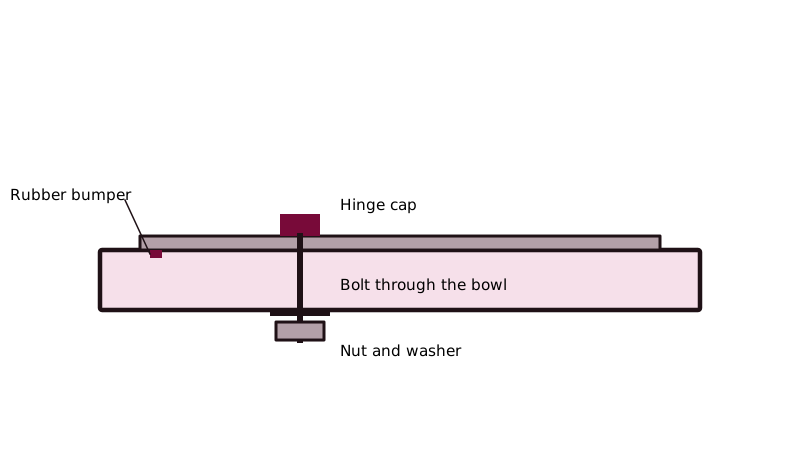
Seats wobble because two nuts have crept loose. Pry up the hinge caps, hold each bolt steady from above, snug the nut below, and check that the seat sits centered. Beyond the seat, a sticky handle, weak flush or constantly refilling bowl usually traces to a few inexpensive tank parts. Heavier trouble belongs under toilet repair.
How can I stop a toilet seat from sliding around?
Open the two small covers behind the seat; they hide the hinge bolts. Steady each bolt head with a screwdriver as you turn the nut beneath, fingers or pliers both work, until the seat no longer shifts sideways. Square the seat to the rim before the final turn, and alternate between the two bolts in small steps.
When a nut spins freely, the bolt or its plastic thread is worn out and the whole bolt set should be replaced. Rubber bumpers under the seat flatten with age as well, and fresh ones cost less than a new seat.
Some seats use expanding bolts that wedge into the bowl holes. Those tighten from the top screw, which spreads the sleeve below. Porcelain cracks under force, so stop at snug.
A seat that never holds position may simply be the wrong shape. Round bowls and elongated bowls need different seats; fit the wrong one and it will keep wandering.
Is it the seat, or does the whole toilet rock?
If the bowl itself moves on the floor, look at the base. The closet bolts may be loose, or the wax seal under the toilet may have given way. Tighten the nuts gently once; if the rocking persists, leave it. Movement breaks the seal, and water can seep under the floor unseen.
Dampness around the base, a soft spot in the flooring or a sewer smell all call for a plumber, because fixing it means hoisting the toilet off the flange and setting a fresh seal. Leak repair at the toilet base outlines the common sources.
Why is my flush handle or button stiff or stuck?
Usually a bent arm, a corroded nut, or a chain pulled tight or hanging too loose. With the tank lid off, watch each part move while you press. The chain should droop slightly when the flapper sits closed. A dual-flush button may need its actuator cleaned or swapped.
To change a handle: shut the supply, flush, and back off the mounting nut on the tank's inner side. It is often reverse-threaded, so clockwise loosens it. Pull the old handle through, fit the new one, and reconnect the arm to the flapper chain.
Newer designs skip the chain and use a lift rod, a cable or a direct link to the flush valve. Look inside the tank before buying, bring the old part along, and write down the tank maker and model number if they appear on it. Handles on the front or side of a tank need a replacement built for that spot.
What makes a toilet flush lazily, and how do I wake it up?
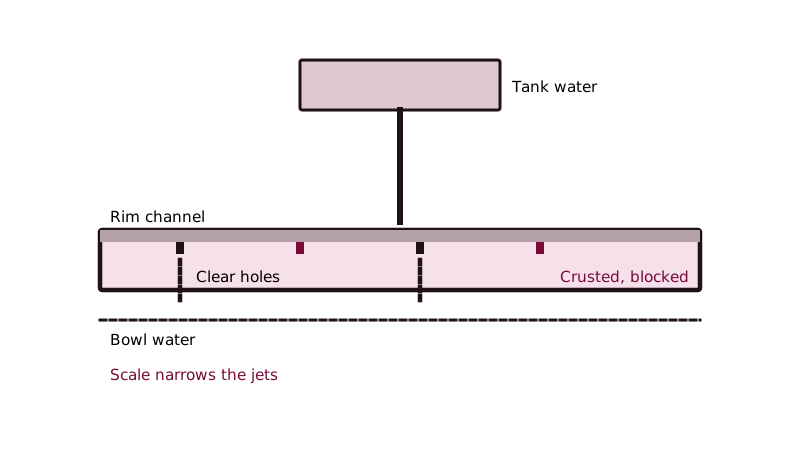
A feeble flush has four usual sources: plugged rim holes, a low tank level, a flapper that falls shut early, or a partly blocked trap. Check in that order of effort, level first and trap last. Where water is hard, scaled rim holes are a regular offender.
Quick checks:
- Level. Water in the tank should stop around an inch short of the overflow tube rim. Stopping lower calls for a fill valve adjustment.
- Chain length. A chain too short keeps the flapper from rising; too long and it can snag beneath it.
- Rim holes. Slide a small mirror under the lip and look for crusted openings. Poke them clear with wire or a stiff brush, then flush.
- Trap. A closet auger may clear it. Persistent trouble means calling about a clogged toilet.
Whittier's city water averaged about 250 mg/L total hardness in the 2025 report. The USGS rates that very hard, so mineral crust on rim holes is a reasonable suspect. Letting vinegar sit in the rim for an hour softens deposits before the brush.
Which part do I change when the tank keeps running?
Start with the flapper. Shut the supply, then flush the tank dry. Unclip the worn flapper from its pegs and chain, hook on a matching new one, then flush repeatedly to confirm that it seals. A flapper that feels soft, warped or slimy with mineral film is the classic culprit.
Related walkthroughs: flapper replacement and fill valve repair. To prove a flapper leaks, drop in a little food coloring, wait ten minutes, and see if the bowl shows color.
Test the small shutoff under the tank before you begin. If it sticks or drips, deal with it first, and repairing that shutoff shows how.
When does the whole flush valve need replacing?
When the base around the overflow tube is cracked, the seat is pitted, or a new flapper still leaks. This is the larger job. Close the water, drain the tank, uncouple the supply line, pull the tank bolts, raise the tank off, then unscrew the old valve and put the new one in.
Use the gasket in the kit, hand-tighten plastic nuts so they do not split, and reinstall the tank with new bolts and washers. Certain designs let you change the valve without lifting the tank, which this walkthrough shows. A frozen tank bolt or a hairline crack in porcelain is the cue to put the tools down and ask a plumber.
Which problems justify calling a plumber?
When the toilet leaks or rocks at its base, porcelain is cracked, a shutoff will not close, a clog beats both plunger and auger, or you lack the time or the tools. If repairs keep piling up, the cost of replacing the toilet is worth weighing.
Explain the problem in the price request form. Someone local then visits your Whittier-area home, with the quote delivered on paper before any repairs. Add the toilet's make if you know it. The front page lists other services.
Common questions
Why did the seat loosen again so soon?
Everyday use makes hand-tight nuts creep, plastic nuts can strip, and a seat that does not fit the bowl shape slides no matter what. Center it, tighten both sides evenly, and replace worn bolts or bumpers. A properly fitted seat stays put far longer.
Can I swap a handle if my toilet has no chain?
Yes. Chainless models use a lift rod or a cable. Open the tank, see how the old handle connects, and buy the same type. Universal handles with adjustable arms exist. Remember the mounting nut is usually reverse-threaded, so clockwise loosens it.
What stops a toilet from running after the flush?
Usual suspects: a worn flapper, or a tank level that rises past the overflow tube. Swap the flapper, then adjust the level and chain. If it keeps running, change the fill valve. Both parts are inexpensive and install with few tools.
Does a wobbly seat count as plumbing trouble?
Not on its own. It is a fastener problem, solved with a screwdriver and perhaps new bolts. Plumbing enters the picture when the toilet itself moves, leaks at the base, or flushes poorly, and those signs deserve a closer look.
Is the water shutoff needed for each of these repairs?
Not for the seat. For the handle, flapper, fill valve and flush valve, yes. Turn the supply valve clockwise, flush the tank empty, and keep a sponge and towel ready for the last drips that run out afterward, and reopen the valve slowly when you finish.