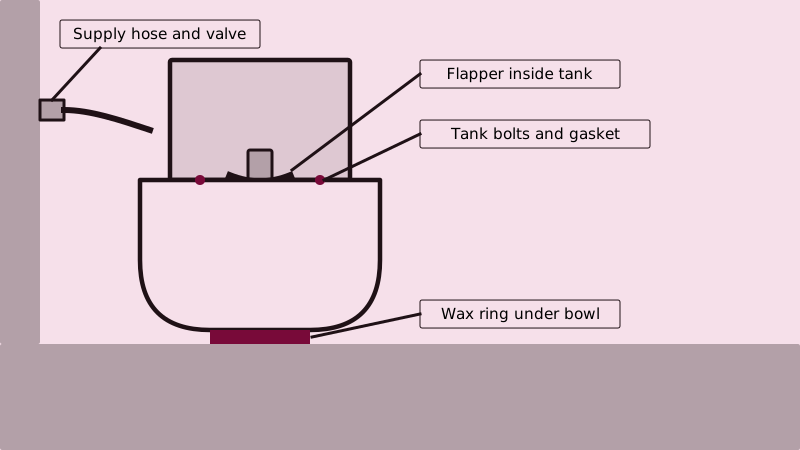
Wipe the floor, then wait and watch. Wherever the first bead of water shows up names the problem: the base, the seam under the tank, the supply hose, the tank walls, or a hidden leak inside the tank that drains quietly into the bowl. Clogs, weak flushes and other faults are covered at toilet repair in Whittier.
How do I pin the leak on one part?
Blot every surface, then tape strips of toilet paper along the base, bolt caps, hose and tank seams. Paper darkens at the source within minutes. A damp ring on the floor implicates the wax ring below the bowl, or the bolts that anchor it. A drip off the tank underside means tank bolts or the gasket. A wet hose or valve means the supply connection.
| Wet spot | Usual cause |
|---|---|
| Floor around the bowl | Tired wax seal or slack closet bolts |
| Beneath the tank, at the bowl joint | Worn bolt washers or spud gasket |
| At the wall valve or flexible hose | Loose nut, worn hose, weeping stem |
| Outside of the tank, all over | Condensation, not a leak |
| Nothing wet, but the tank hisses or the bowl keeps topping up | A silent leak past the flapper or fill valve |
Most people miss that last row. Wikipedia describes a toilet as a bowl fed by a cistern, and the working parts inside the cistern can leak with no puddle to show for it.
Is the toilet leaking inside the tank without any puddle?
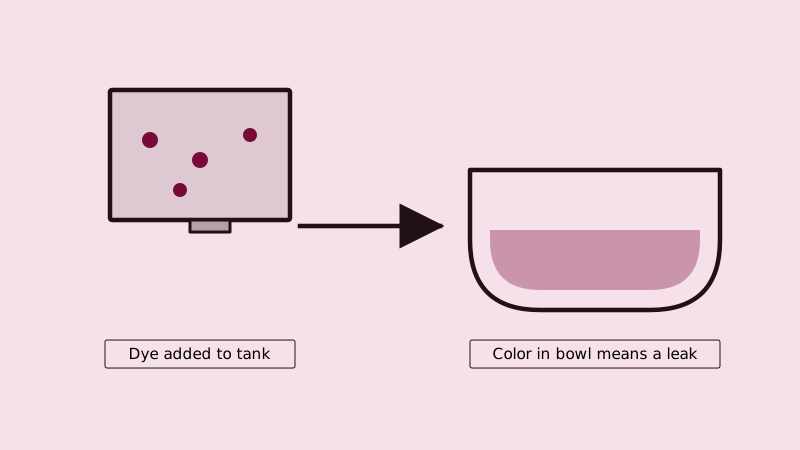
Test it with dye. Dye the tank water using food coloring, leave the handle untouched, and give the bowl ten minutes. The EPA says color in the bowl inside 10 minutes confirms a leak, and recommends flushing once you have your answer, so the dye leaves no stain. The usual cause: a flapper whose rubber edge no longer closes tightly.
Worn flappers can leak for years unnoticed, and the EPA says that wastes thousands of gallons annually. Its tips: inspect the flapper regularly, swap it by year five at the latest, and carry the old part, or a photo, into the store with you. The swap is shown in toilet flapper repair.
A tank that refills itself over and over, or hisses, calls for a look at the fill valve and overflow tube next. Those get their own pages: repair a toilet fill valve and toilet overflow tube repair.
What stops water collecting beneath the bowl?
Rocking and puddling mean the wax seal gave up or the bolts loosened. Begin gently, nipping each closet bolt in small alternating turns, because too much force cracks china. If wetness comes back, the bowl has to come up, the wax ring gets replaced and the flange gets looked at.
Lifting sequence: shut the supply, flush and sponge the tank and bowl dry, unhook the hose, pull the bolt caps and nuts, then raise the bowl straight up onto a towel. Scrape off the old wax, look at the flange for cracks and rust, press down a new ring, lower the bowl, and snug the nuts evenly. A bowl is heavy, so ask someone to help.
A rusted or broken flange, or a floor that feels spongy or looks stained, is where you stop. That needs a plumber, and occasionally a carpenter. Base water is rarely clean, so wear gloves and disinfect the area afterward.
And a drip at the joint above the bowl?
Most trace back to stiff old washers on the tank bolts or the big spud gasket. Close the supply, drain the tank, lift it clear, fit fresh washers and a gasket, and reseat it with the bolts snug but never forced. A tank is brittle, and an overtightened bolt can split it.
A tank-to-bowl kit with bolts, washers and gasket for your model removes the guesswork. A cracked tank is rarely worth fixing. Treat that as a replacement.
What about a wet hose or wall valve?
The easy one. Close the valve, back the old braided hose off, thread a new one on, and add a gentle quarter turn past hand-tight. A valve weeping around its stem should be replaced, a small job for a plumber, described under toilet shut-off valve repair.
If that valve will not turn off, the main valve has to be closed while the work goes on. Old valves sometimes snap when forced, so go slowly with a towel on hand.
When does replacing beat repairing?
A cracked bowl or tank, crazing, repeated failed repairs and discontinued parts all point to replacement, because sealant cannot fix cracked porcelain. A bad flapper, fill valve, gasket or wax ring is cheap to repair. For what a new one involves, see toilet replacement pricing.
If only the seat wobbles, tightening a loose toilet seat is the quick fix.
Is a small toilet leak really worth fixing now?
Yes. The EPA's yearly figure for leaks in a typical household tops 9,300 gallons, and a toilet seeping into the bowl may do it silently, night and day. A base leak rots subfloor and ruins flooring, and an upstairs bathroom can drip into the ceiling below.
Check the flapper now and then, and act on dampness fast. To book a visit, note on the price request form where the water shows and when it began. Everything else we arrange is outlined at Rio Hondo Plumbing.
Common questions
Will caulk stop water at the base?
Caulk around the outside edge is cosmetic, because the seal that counts is the wax underneath. It can even trap water beneath the bowl and hide the problem. Fix the seal first, then caulk for looks if you like, keeping a small opening at the back as a tell-tale for any later leak.
How long does the work run?
A flapper or hose takes minutes. Tank bolts or a fill valve take an hour or less with the right parts. A wax seal means lifting the toilet, which takes longer, and flange or floor damage adds more on top. Which one applies is clear only once someone looks at the toilet.
Why does mine leak only on a flush?
Flushing sends a surge through the joints, so a seal that copes with still water can fail under load. The base wax seal and the tank gasket are the likeliest suspects. Dry everything, flush while watching, and note which spot gets wet first.
Will insurance help if the leak damaged the floor?
That turns on the policy and on whether damage was sudden or gradual, which many policies treat differently. We cannot speak for insurers, so read your policy's wording, put questions to your agent, photograph the damage and keep every repair receipt.
What do replacement parts cost?
Flappers, wax seals, hoses and bolt kits are inexpensive hardware items, though prices move, so none are listed here. A call-out brings labor and a visit fee. On an elderly toilet, ask for the repair quote alongside a replacement quote.