Start by comparing. Turn on the bathroom sink and a kitchen tap: if they run strong and only the shower is weak, the cause is in the shower itself. If every fixture is weak, read low water pressure in the whole house instead. This page belongs to our faucets, sinks, showers and disposal repair section. To book a plumber, use the price request form.
Why is only my shower weak when other taps are fine?
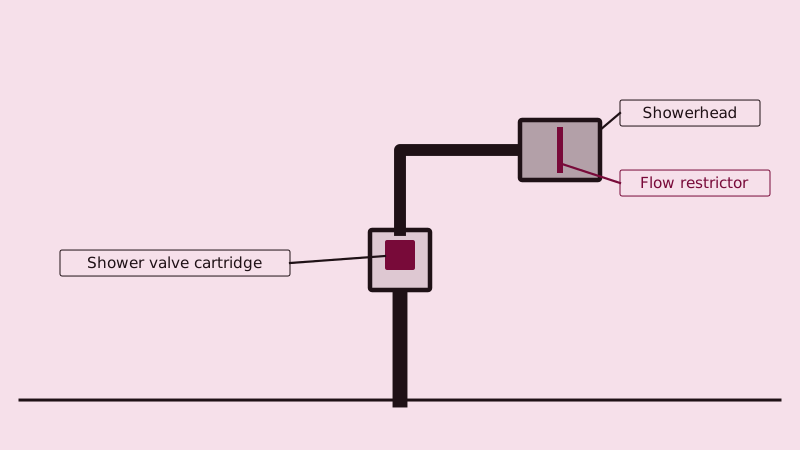
The cause is almost always the showerhead, the flow restrictor behind it, or the valve and cartridge in the wall. Mineral scale clogs the spray holes, a cartridge wears and restricts flow, or a diverter fails. A plumber's test is simple: take the head off and run the arm.
Remove the showerhead and run the water into a bucket. If flow is strong, the head is the problem. If it is still weak, the cartridge, valve or supply to the shower is restricted. Our summary of why water pressure is low covers the house-wide possibilities, but start at the shower.
How do I clean a clogged showerhead?
Unscrew the head, soak it in white vinegar for a few hours so scale dissolves, scrub the nozzles with an old toothbrush, rinse, and reinstall with fresh plumber's tape on the threads. If the head is non-removable, fill a bag with vinegar and tie it over the head overnight.
Check the small screen behind the head for grit and the rubber washer for wear, and clear any debris. Scale is likely here. Whittier's city water averaged about 250 mg/L total hardness in the 2025 report, roughly 14.6 grains per gallon, and mineral buildup on small openings is a common result of hard water. If scale returns within weeks, see removing hard water scale and scale prevention.
Could a flow restrictor or a new showerhead be the cause?
Yes. Modern showerheads are built to limit flow. EPA says standard showerheads use 2.5 gallons per minute, and WaterSense-labeled models must use no more than 2.0. A new head can feel weaker than an old one even when pressure is fine, and some include a small restrictor disc inside.
WaterSense heads are also required to meet a spray-force standard, so a good one still feels full. Compare brands by spray pattern, not only the flow rating. Removing a restrictor is a modification and may raise water use, so check the maker's instructions and any local rules before doing so. If a showerhead feels weak straight out of the box, try another model before you open a wall.
What if the shower valve or cartridge is worn?
A worn cartridge in a single-handle valve can restrict flow, and debris trapped in it makes one temperature weak. Symptoms include strong cold with weak hot, a handle that is stiff or loose, or flow that changes with handle position. Replacing the cartridge is a small repair, if you can find the right model.
Shut off the water to the shower or the house, remove the handle and trim, pull the cartridge and look for grit. Cartridges are brand and model specific, so take the old one to a supplier. Pressure-balancing valves protect against scalding when another fixture is used, and a failed one can lower flow. If the cartridge is stuck or the valve is corroded, the repair may involve opening the wall, which is for a plumber. A leak at the same valve is covered in fixing a leaky shower faucet.
Why is the hot side weak but the cold side normal?
Weak hot only points to the water heater side: a partly closed heater shutoff, a clogged sediment-filled tank, a failing dip tube, a clogged heater outlet or hot line, or a cartridge problem on the hot side. Check the heater's shutoff valve first, then compare hot and cold at the bathroom sink.
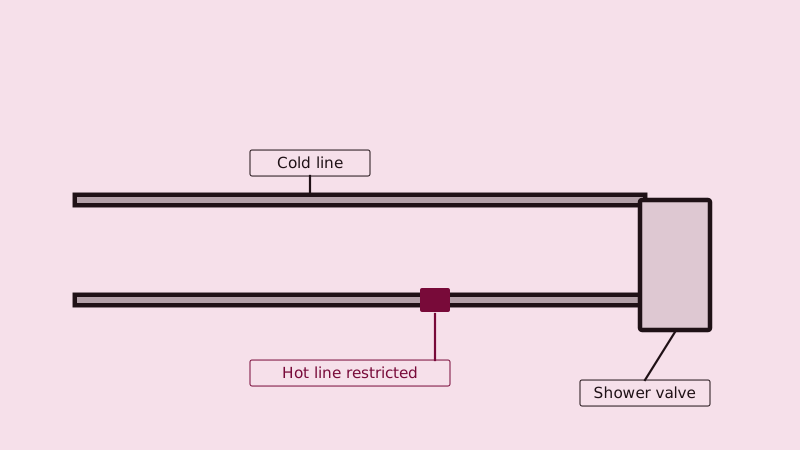
If sinks have strong hot and only the shower is weak on hot, it is the shower valve. If every hot tap is weak, look at the heater. Sediment can plug the outlet and restrict hot water flow. See water heater service and repair and no hot water in the shower. A tub spout and shower on the same valve may behave differently, and fixing a leaky tub faucet explains that part.
Could the pressure regulator or a pipe be to blame?
Yes, if more than one fixture is weak. A failing regulator, a half-closed main or a narrowed galvanized line lowers flow everywhere, and the shower shows it first because it uses so much water. A gauge on an outdoor spigot tells you: below 40 psi is low, and 40 to 60 is typical.
Many postwar homes in Whittier, Downey and Norwalk have older supply lines that narrow with mineral deposits, and a plumber can judge the pipe type and condition. See galvanized pipe replacement, regulator replacement and what causes low pressure in a house. A sink-only issue is in low pressure at the sink.
When should I call a plumber for a weak shower?
Call when you have cleaned the head, tested without it, and the flow is still weak, when the problem is in the wall, or when more than one fixture is affected. A plumber can test pressure, replace a cartridge or valve, and open the wall if needed.
California requires a contractor license for work of $1,000 or more in labor and materials, and for any job that needs a permit. Replacing a showerhead or a cartridge is well below that. A full valve replacement behind tile is more involved. Ask for the quote in writing. We do not print a price here because we have no sourced local figure. The home page lists the other jobs we arrange.
Common questions
Can a clogged showerhead really cut water pressure that much?
Yes. Scale in the spray holes narrows the openings, which reduces flow and makes spray uneven. A vinegar soak often restores it. If the head is old, a new WaterSense model may spray better, since the spray-force requirement is part of the label.
Why did my shower pressure drop after a repair?
Plumbing work can stir up debris that lodges in the showerhead screen, aerators or cartridge, and a valve left partly closed will also cut flow. Check the main and stop valves are fully open, clean the showerhead screen, and run each tap to flush debris. If it persists, call.
Is a pressure-balancing valve the same as a regulator?
No. A pressure-balancing valve sits at the shower and keeps temperature steady when another fixture changes pressure. A regulator sits on the house supply and limits overall pressure. California Plumbing Code limits house pressure to 80 psi, and a failed regulator is a different repair.
Does low shower pressure mean a leak?
Sometimes. A leak upstream can lower flow, particularly if the pressure fell suddenly or the water bill rose. Check the meter with all water off for two hours, as EPA suggests, and call a plumber if the dial moves. See leak repair for that step.