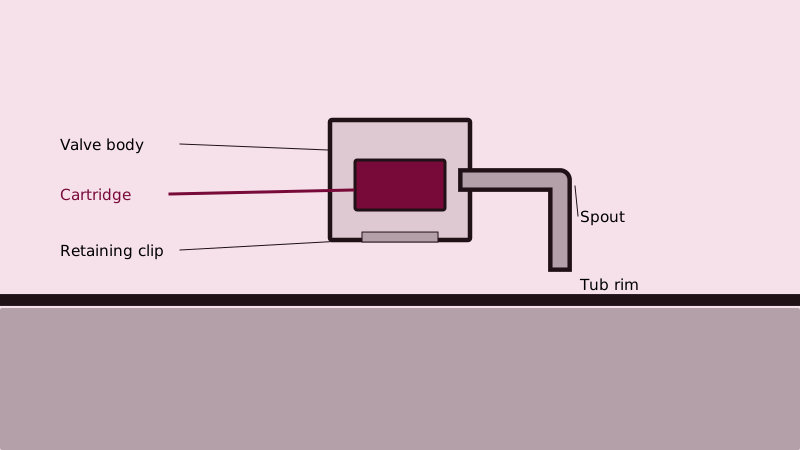
Drips from a tub faucet almost always trace to one small part, and the repair is a morning project rather than a plumber's emergency. Work out which faucet you own, swap the tired seal for an identical one, and test. When the valve itself is corroded, the garbage disposal, faucet and shower repair page shows the plumber route.
How can I tell what style of tub faucet I own?
Study the handles. A single lever or knob controlling both temperature and flow signals a cartridge or ball valve. A hot knob plus a cold knob signals compression stems with rubber washers, or ceramic discs in newer models. The type decides every step that follows, so settle it before buying parts.
A quick tell: with two handles you feel a firm stop as you screw down the knob, and the stem rises as you open it. A single lever pivots or slides. Snap a photo, jot down any brand stamped on the handle or trim, and you are ready to shop.
What is behind a tub faucet that begins to drip?
Dripping starts when the seal that shuts the water off no longer meets its seat tightly. Grit, wear and dissolved minerals roughen the contact surface. Whittier's 2025 city water report shows total hardness averaging 250 mg/L, which leaves crust on seals and seats, and old rubber hardens and cracks over time.
Do not shrug it off. EPA's estimate is that leaking fixtures help drain the average home of 9,300 gallons and more each year, and tub drips often carry hot water you paid to heat. Whether it moves your bill is the topic of leaky faucets and high water bills.
How do I get ready so nothing falls down the drain?
Cork the drain with a rag, lay a towel over the tub floor, and set out a muffin tin for screws so they stay in sequence. Round up a screwdriver, hex keys, pliers, white vinegar and a flashlight. Bring the old part with you when you buy the new one.
Water comes next. Some bathrooms hide stop valves behind a panel in the closet, but most tubs rely on the house valve. Close it, then open the tub faucet to bleed out the line. If it still drips, the stop is not closing, and that is a plumbing repair of its own.
How does the repair go on a single-lever model?
Pop off the cap that hides the handle screw, back the screw out, and ease the lever from its splined post. Unscrew the trim plate. Behind it sits the cartridge, held by a nut or a U-shaped clip. Free that, grip the stem with pliers, and coax the cartridge straight toward you.
Wipe the cavity clean and inspect the rubber rings. Push the new cartridge home with its notch pointing wherever the old one pointed, restore the clip or nut, and rebuild the trim. A light smear of silicone grease on the new rings is worth the effort. Reopen the house valve slowly, run the tub, then close and watch for drips. A shower-valve variant of this job is covered in shower faucet repair.
What changes with a Moen faucet?
Moen builds most of its tub and shower valves around a plastic or brass cartridge pinned with a clip. After the handle and trim come off, slide the clip out with pliers, then twist and pull. The replacement must line up with the stops, or hot and cold arrive swapped. Bring the old cartridge to confirm the model.
Cartridges can weld themselves into the valve body with mineral scale. Dribble white vinegar around the stem, give it time, and rock the cartridge gently. A broken cartridge or a chewed valve body moves the job into plumber territory, which the section on shower leak repair explains.
How is a two-handle faucet repaired?
Take off each handle, then use a wrench on the bonnet nut and lift the stem out. A rubber washer sits on its tip, secured by a small screw. Swap the washer, run a fingertip across the brass seat inside the body, feeling for nicks, and fit a new O-ring on the stem before reassembling.
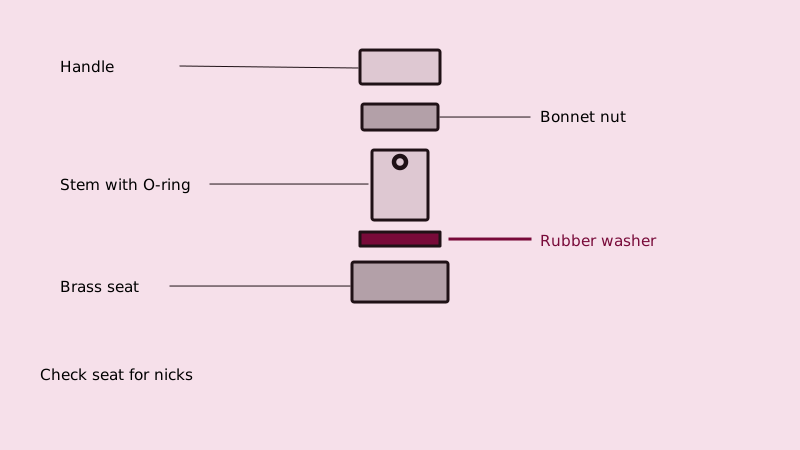
If the seat is gouged, a new washer dies fast. A seat dressing tool smooths it, and some bodies take a removable seat. Tighten the handle only until it feels firm. Do the other side if both sides leak, because a mismatched pair fails quickly.
Why does the spout or showerhead keep running after I shut the tub off?
That points to the valve behind the wall rather than the spout. Replace the cartridge or washers as described. If water pours from the spout while you hold the diverter up for the shower, the diverter gate is worn, and the spout may need replacing.
A spout that leaks at the wall joint is another matter. Check the caulk line and set screw first. Moisture that reaches the wall cavity deserves attention, and a stained ceiling below the tub means call a plumber promptly rather than waiting.
Could the wet spot be a pipe beneath the kitchen sink?
Wipe each joint dry, then touch tissue to them one by one until one turns damp. Slip nuts on the trap often just need snugging. Otherwise the washer inside has cracked, a braided supply hose has aged, or a compression fitting has loosened. Replace the single faulty piece when you can.
Plastic fittings want hand tightness plus a little more, because pliers can crack them. Aging braided hoses cost very little and are worth swapping while you are there. A corroded steel pipe or any joint inside a wall belongs to a plumber. The kitchen-side details are in the under-sink pipe leak guide.
When is the job past DIY?
Quit if the valve body is eaten by corrosion, the stops will not seal, screw heads are stripped, or the drip survives the repair. Leaks inside the wall also qualify. A rebuilt cartridge is cheap, but a body replacement involves cutting into the wall and sweating or crimping new connections.
No contractor is required for a cartridge swap. The state only steps in once the bill reaches $1,000 for labor and parts, or when a permit is involved. Replacing a whole faucet has its own price page, faucet installation cost. For ways to slow scale in the future, try stopping scale before it builds.
Common questions
Can I skip shutting off the house water?
Just if the tub has stop valves that work, and many do not. Otherwise close the house valve, then open the tub faucet to bleed the lines. Check for an access panel in the closet or hall behind the tub, since the stops may be hiding there.
The faucet leaks again right after I fixed it. Why?
Usual causes are a cartridge installed rotated, a pinched or nicked O-ring, a clip left out, or a seat in the valve body that is damaged. Pull it apart, check alignment and rings, and grease them lightly. If it keeps dripping, the body is the suspect.
Is replacing the whole faucet smarter?
For decades-old, corroded or discontinued models, often yes. Work behind the wall needs access plus sweated or push-fit joints, which is why many owners hire it out, and our price request form is the way to line up a quote with a plumber we arrange.
Does the city need to hear about this?
Not when you are repairing the same faucet as is. Permits come into play with bigger changes such as moving or replacing valves in the wall. The City of Whittier Building and Safety Division, (562) 567-9320, can explain what applies, and the plumber can verify for your address.
This guide is one of many on plumber in Whittier.