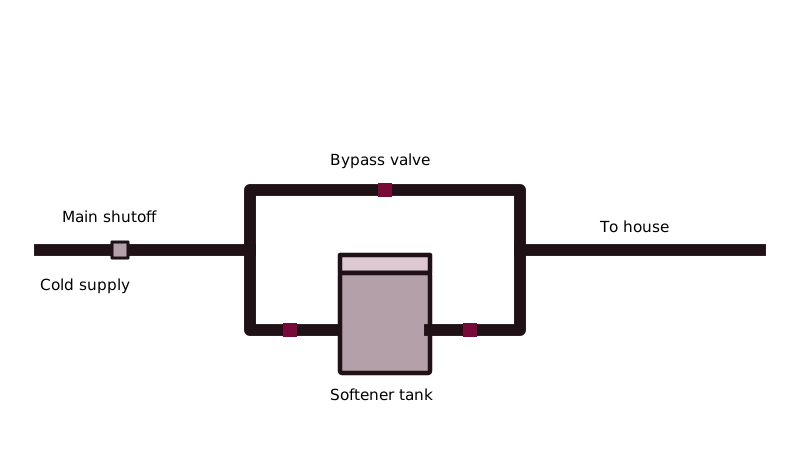
The job in outline: splice the softener into the cold supply where it enters the house, add a bypass of three valves, send the discharge hose to a drain across an air gap, power up the head unit and enter your hardness. Owners who solder, crimp or use push-fit fittings can manage it, and many still hire it out. The paid route is explained on the water softener installation page.
Is installing a water softener a realistic DIY job?
For someone comfortable with pipe work, yes. Expect a weekend afternoon, not a lunch break. The tank is heavy once filled with salt, the plumbing connection is a cut-and-join on the main supply, and a mistake shows up as a leak at a pressurized joint. If you have never sweated or crimped a pipe, hire it.
Know where DIY ends. A careless install can flood a garage or push brine somewhere it should not go. Work that needs a permit, touches gas piping, or means opening walls goes to a contractor. The state threshold is $1,000 in labor and materials, above which California requires a contractor license.
Is local water hard enough to justify a softener?
Hardness varies by street. The City of Whittier reports an average of 250 mg/L (roughly 14.6 grains). The Golden State Water Norwalk system averaged 310 mg/L (about 18 grains), its Artesia system 191 mg/L (about 11), and La Habra Heights County Water District 309.8 mg/L in 2023 (18.1). Pico Rivera's 2023 report averaged 174.4 mg/L.
Your supplier's own yearly report beats any average, and it is posted on the water company's website under "consumer confidence report". Cheap strips sold at hardware stores give a quick second opinion straight from your tap. Crusty showerheads, cloudy glassware and a rumbling water heater all hint that treatment may pay off.
Every softener has trade-offs. Salt-based models raise sodium and flush brine to the drain. The state's Health and Safety Code (starting at section 116775) says certain local agencies may restrict residential units that discharge to a sewer once they make specific findings. Phone your city or water supplier before you buy a salt-regenerating model.
Which parts and tools should be on the bench first?
You need the softener (sized for household occupants), a bypass kit, two shutoff valves, fittings matching your supply pipe (copper, PEX or CPVC), drain tubing, an air gap or standpipe, clamps, pipe tape, a pipe cutter and bags of salt. Look for a grounded outlet close by, plus a drain in the floor or a washer standpipe within hose range.
Measure the supply pipe and identify what it is made of. Galvanized steel calls for special transition fittings, and old galvanized is frequently rusted shut inside. If a cut shows crumbling, look at galvanized pipe replacement before anything else.
The manufacturer's manual decides how bypass, drain and brine lines connect, so read all of it. Air gap details may also be set locally. In Whittier, Building and Safety handles permits and inspections on (562) 567-9320.
In what order does the install go?
Begin by closing the main and draining the pipes. Choose a spot on the cold run past the meter and ahead of the water heater. Cut in, mount the bypass, join inlet and outlet to the marked ports (they are not interchangeable), load salt in the brine tank, and finish with the drain hose and its air gap.
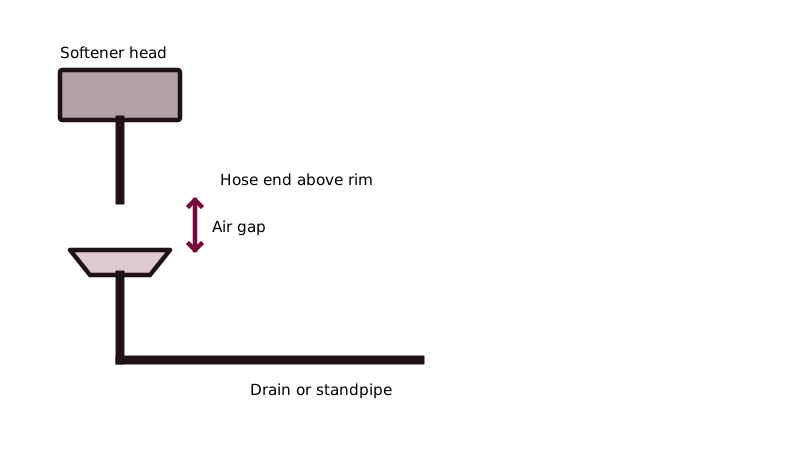
Reopen the supply gradually with a faucet running until the air has left the pipes. Inspect each joint for weeping. Connect power, set the clock, enter local hardness and trigger one manual regeneration to rinse the resin. Watch the drain hose while it cycles.
Keep outdoor taps and the kitchen drinking tap on hard water if you prefer; many people leave the garden bibs untreated to save salt, and the line feeding them can branch off before the softener.
How do you clear existing scale in the meantime?
Leave detachable parts in a vinegar bath for an hour, brush lightly, rinse. A fixed showerhead can soak overnight in a vinegar-filled bag held on with a rubber band. Kettles respond to the same treatment. Remember that a softener stops new buildup; scale already lining pipes or heater elements stays put.
Scale in a tank heater is a slower problem, and draining sediment yearly helps. Further guidance: removing hard water scale and preventing it from forming.
What jobs belong to a plumber rather than to you?
Hand it over if the main is galvanized or brittle, the space is cramped, the drain run is long or missing, your city restricts softeners, or you want it right on the first attempt. A plumber can also read your water pressure; the plumbing code caps supply pressure at 80 psi.
To have someone look at your setup, ask for a quote. Numbers for budgeting are in what a whole-house softener costs installed. Our home page covers the other services.
Common questions
Where in the house does the softener go?
Right after the main shutoff on the incoming cold line, typically in the garage or a utility closet near the heater. It needs a drain, a grounded outlet and space to lift heavy salt bags. Whether hose bibs stay hard is your choice.
Does Whittier require a permit for a softener?
That depends on scope and on the city. A swap of an existing unit may not trigger one, while new piping can. Ask the building division first; Whittier's Building and Safety Division lists (562) 567-9320. A water supplier or sewer agency may add rules of its own.
Will a softener work on old galvanized supply pipe?
It will connect, but rusted galvanized steel often crumbles when cut, and a softener cannot repair a failing pipe. Cut a short test piece before you commit to the job. If the metal is in poor shape, replace that run first, because a softener only adds a new joint to a pipe that is already failing.
What upkeep does a softener need?
Check the salt level monthly and top it up, and clean the brine tank if a crust or sludge forms. Resin lasts many years in typical conditions, but the manufacturer's manual sets the schedule. Annual attention to the drain line and bypass valve is a sensible habit.
Does soft water taste different, and is it safe?
Softened water contains more sodium than the same water unsoftened. People on low-sodium diets often keep one drinking tap on unsoftened water or ask their doctor. Scale and spotting drop. A softener does not remove contaminants such as lead or PFAS, so it is not a filter.
References
- City of Whittier 2025 Consumer Confidence Report (hardness 230 to 270 mg/L)
- Golden State Water, Norwalk system water quality report 2025
- Golden State Water, Artesia system water quality report 2025
- La Habra Heights County Water District, water hardness
- Pico Rivera 2023 Consumer Confidence Report
- California Health and Safety Code, Water Softeners article (sections 116775 and following)