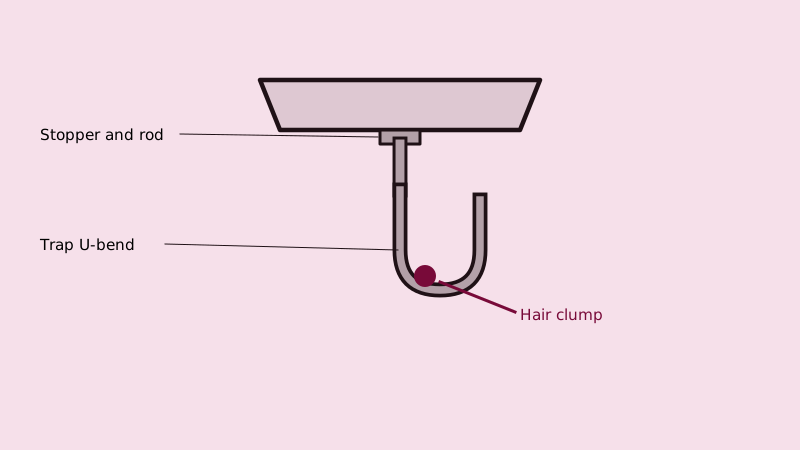
Grab a bucket, a flashlight and an old towel. Your first target is the stopper, because the pivot rod behind it collects hair like a comb; your second is the bend under the bowl. Both clean and the flow no better, or other fixtures slow as well? Then the blockage lies downstream, and the clogs and drains hub points to the next move.
What actually slows a bathroom basin?
Hair, toothpaste and soap, bound together by mineral film. They collect at two spots: on the stopper and its rod, and in the U-bend. The pipe beyond rarely clogs from a single basin's use. A steady, slow drain is a partial blockage. A basin that fills and then suddenly gulps is nearly sealed at the trap.
Match what you see to a likely spot:
- Steady but slow: stopper assembly or trap.
- Pools, then gulps: trap mostly full.
- Gurgles from some other drain: a shared branch.
- Shower pan or floor drain filling up: the main line.
- Sour smell with normal flow: slime in the trap, or one that has dried out.
Soap does not dissolve cleanly in hard water; it leaves curds. Whittier's city water averages roughly 250 mg/L total hardness (2025 report), so scum here can be stubborn, and a seasonal cleaning of the stopper pays off.
What is the easiest fix to try first?
A plunger, used right. Bail out the standing water, press a wet washcloth into the little overflow slot beneath the rim, then seat a small cup plunger on the drain and pump a dozen times without lifting it. An open overflow lets the pressure escape rather than push the clog.
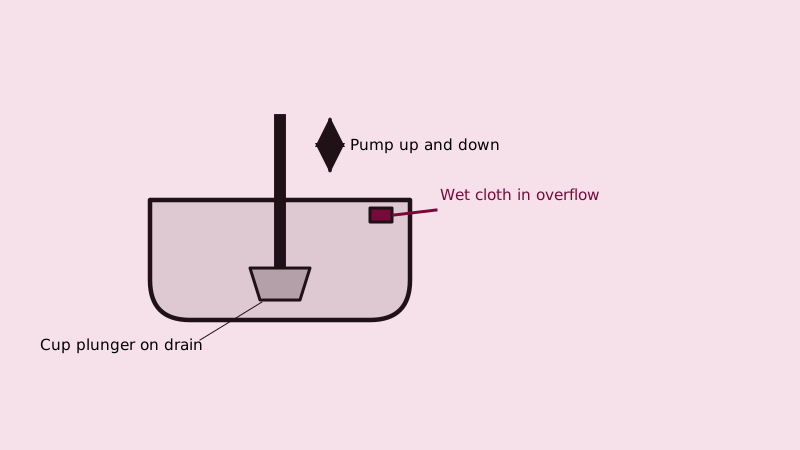
Follow it with a minute of hot tap water. Skip the kettle: boiling water can soften PVC and crack old porcelain, and it will not melt a hair-and-soap mat anyway. A plunger helps with light clogs only. If the level barely moves, the clog is likely holding on to the rod or sitting in the trap, so take them apart.
How do you take apart and clean the stopper and trap?
Start with the stopper. Behind the drain pipe a horizontal rod usually holds it; back off the retaining nut, withdraw the rod and lift the stopper out. Then free the trap by turning its two slip nuts, tip the contents into the bucket and brush the inside clean. Rinse, then rebuild.
Here is the sequence in more detail:
- Clear the cabinet, then set a pail where the U-bend will drain.
- Unscrew the nut on the pivot rod where it enters the drain pipe, then slide the rod free.
- Lift the stopper from above. Peel off the hair, which is usually wrapped around its stem.
- Turn each slip nut on the trap counterclockwise. Fingers often do it; pliers help on crusty ones.
- Empty what the trap holds into the bucket and scour the inside.
- Shine a light up into the wall stub. A hooked plastic strip can reach a visible clump.
- Put it back with washers sitting flat and nuts hand-snug, then let water flow and watch the joints.
If a joint weeps, snug it one quarter turn further; a persistent drip may need a new washer. Our under-sink leak guide covers the rest.
Is a chemical cleaner worth trying?
Fizzing baking soda and vinegar look busy but seldom shift a real blockage. Chemical cleaners can open a partial clog, but they are caustic, they can harm older pipes and fixtures, and they put a plumber at risk if the trap still holds product. A mechanical clearing removes the clog rather than dissolving a piece of it, which is why I lean toward tools.
Should you use a chemical product regardless:
- Use one product only. Mixing cleaners or adding bleach or vinegar creates dangerous fumes.
- Wear gloves and glasses, and open a window.
- Keep it away from a sink full of water you intend to plunge; splashing hurts.
- If it did not work, mention it to the plumber so caustic leftovers are handled carefully.
Folk remedies are weighed in kitchen-table fixes for sink clogs, and the bathroom sink guide gives variations.
How do you know the problem goes beyond one basin?
Watch for patterns. Two fixtures slow together, a drain that gurgles when something else runs, water rising in the shower pan, or a clog back within days all point to a shared drain branch or the main, and that calls for a plumber's drain machine or camera.
Many postwar houses in Whittier, Norwalk and Downey were built with waste lines of cast iron or clay, which can scale, crack or admit roots, though only an inspection reveals what yours are made of. A camera shows the state of the pipe wall. Hydro jetting, a high-pressure water scour, suits sound lines, so ask whether it fits yours before agreeing. For a kitchen basin, try the slow-sink explainer.
What keeps a basin flowing?
Fit a hair catcher, clean the stopper each month and scrape toothpaste and shaving residue into the bin, not the basin. Flush with hot tap water after heavy use, and pull the trap yearly or twice a year if this basin has a history. Maintenance costs minutes a month.
Some extra advice:
- Keep oils and greasy products out of the drain.
- Use less styling gel and heavy conditioner near the basin.
- If scale is a recurring issue, a softener helps at the source; see hard water scale prevention.
- When a cleaned sink slows again within a week, request a camera inspection and stop buying cleaner.
What is beyond a home repair?
It ends once stopper and trap are clean and the basin is still slow, once several fixtures are involved, or once water backs up, sewage smells appear or a leak starts. Ask for the estimate on paper, plus a license number to verify at cslb.ca.gov. Anything requiring a permit goes to a contractor with a California license.
A local plumber can visit after you send details through the price request page. For wider needs, the plumber service page lists what we arrange. Always shut off the supply before opening pipes under a fixture, and leave gas lines alone.
Common questions
How long should I budget for it?
Stopper and trap together normally fit in half an hour. A clog inside the wall takes longer, and one in a shared line calls for a plumber's machine. When your attempt fails, a professional can quote a time after looking.
What should I settle before a drain visit?
Collect the license number and trip charge, and ask if a camera inspection is thrown in when clogs recur. Learn whether they clear lines with tools instead of chemicals, and have anything bigger than a simple clearing quoted in writing first.
Must an adult be there?
An adult should admit the plumber, indicate the basin and any other slow drains, and listen to the findings. Simple clogs go fast. For a cleanout or outdoor camera run, unlock the gate and make sure the cap is within reach.
Should I pour boiling water down it?
Better not. Boiling water can warp plastic drain pipe and crack aged porcelain, and a hair-and-soap clog barely notices it. Hot tap water does the job once the clog is out; if you do pour hot, go slowly and keep your face away.
What makes it slow again within a week?
Some of the clog stayed behind, or the real blockage sits farther down. Hair and soap rebuild fast on rough pipe, and hard-water scale gives them a surface to grip. If a thorough cleaning will not hold, a camera inspection can show damage.
This guide is one of many on Rio Hondo Plumbing.