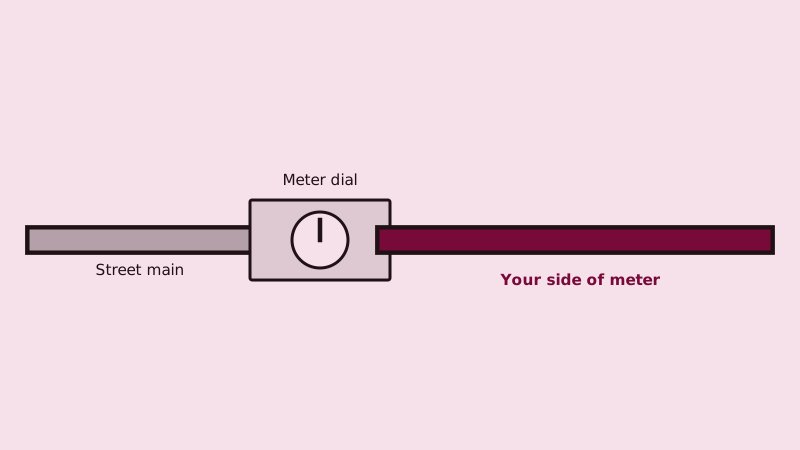
When a statement jumps, something changed: usage, the meter reading, or the length of the billing period. Usage is the piece you can fix, and the cause is generally a leak or a sprinkler schedule, not a household that suddenly got thirstier. Start with the meter test below, then bring in Rio Hondo Plumbing if it points to a pipe problem.
What usually makes a water bill jump?
Water that runs when nobody is using it causes most spikes: leaks, irrigation and tired fixtures. By EPA's count a typical household sends over 9,300 gallons per year down the drain through leaks, and for about 1 home in 11 the loss tops 50 gallons per day. Outdoor watering, guests, a filled pool or an extra-long billing cycle explain much of what remains.
Suspects, roughly in order of how frequently they are guilty:
- A toilet flapper or fill valve that lets water trickle into the bowl all day.
- A dripping tap or showerhead. EPA says one drip a second means 3,000-plus gallons gone each year.
- A sprinkler or drip line with a cracked head, a stuck valve or a timer nobody reset.
- A supply pipe leaking in the yard, beneath the floor or behind a wall.
- Something that changed in the household: houseguests, a new baby, a refilled pool, a remodel.
- The bill itself, such as an estimated reading or a cycle with extra days.
Can I test for a leak without any tools?
Yes. Note what the meter says, then leave every tap, appliance and sprinkler line idle through a two-hour wait, then read the dial again. EPA's guidance treats any change as a probable leak. Many meters have a little triangle or dial that spins at the faintest flow, which makes a slow drip visible.
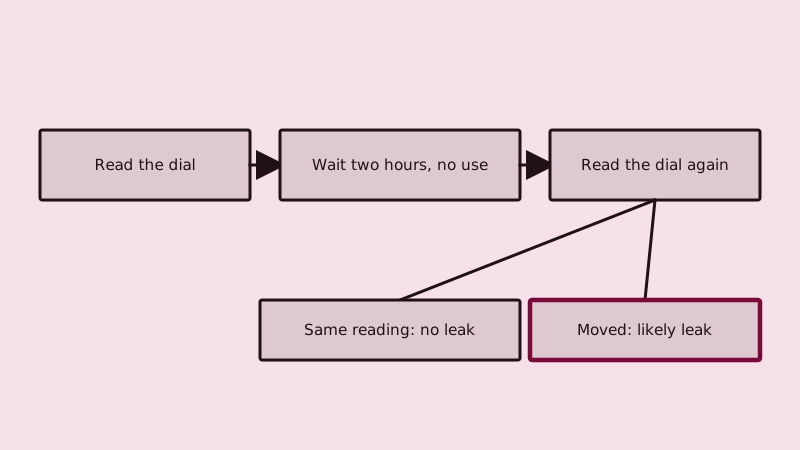
Pick a quiet window, such as overnight. Icemakers and softeners refill by themselves, so keep that in mind. A steady meter means the water is going where you send it, and the cause is habit or season. A moving one calls for a second round: close the house shutoff, the one downstream of the meter, and check again. Still moving means the trouble sits on the stretch between meter and house, in the yard or under a slab. Stopped means it is inside.
Hidden causes get their own page: a high bill with nothing visibly leaking, and small ones on whether a leaky faucet can cause it.
Could one toilet account for all of it?
It can be, and it is the single likeliest suspect. A worn flapper or sticky fill valve can bleed water into the bowl silently. EPA's test calls for colored dye in the tank: add a few drops, give it ten minutes, and see if the bowl turns. Flush straight afterward, since dye can discolor the tank.
It also suggests a fresh flapper at least once in five years. A failed dye test usually means a cheap part and an hour of effort, and the steps are in repairing a toilet fill valve. Test every toilet in the house, because one may be fine while another quietly drains your account.
What if nothing leaks and the bill is still huge?
Then examine habits and the statement itself. EPA puts typical family use at over 300 gallons a day at home, roughly seven-tenths of it indoors, and the outdoor slice grows in dry regions. A few more irrigation days, a car-washing streak or a freshly filled pool can move the total a lot.
Read the dates on the statement as well. A 35-day cycle in place of a 29-day one looks like a jump even when daily use is flat. Compare any estimated read against the real dial. A meter that spins with every tap closed is a conversation with your water provider, not a plumbing job. Keep your account number and the last three bills handy before you call.
New equipment counts too. A recirculation pump, a garden project or fresh landscaping with new irrigation all add gallons, so budget water along with materials for projects like these.
Why would the bill spike in winter?
Winter use should be low, so a high figure stands out. For four people, EPA reads anything past 12,000 gallons in one cold month as a hint of serious leaks. With mild weather, an irrigation timer can keep running through a wet spell, and one stuck zone valve may run unnoticed for days.
Check the controller first: switch it off for a week and compare. Then hunt for damp drywall, a tile patch that stays toasty, or the murmur of water inside a wall. Older galvanized or copper lines can pinhole at any time of year. If the meter test fails, what locating it costs is laid out under leak detection cost.
Which utility bills me, and where do I complain?
It depends on the street, even inside one city. Whittier runs its own water system, as do Downey, Norwalk, Pico Rivera, Paramount, Cerritos, Santa Fe Springs and La Habra Heights through city or district utilities. Bellflower, La Mirada, Artesia and Hawaiian Gardens are served by a patchwork of investor-owned, mutual and other utilities, and Golden State Water covers parts of several of these cities.
That mix explains the odd search for an American or investor-owned bill: companies such as Suburban Water Systems answer to the California Public Utilities Commission, and a rate change can raise a bill without any change in your use. Look at the top of your statement for the company name before you call anyone, since the support line and the meter policy are theirs. The service areas page lists each city we cover.
Public projects can matter too. Hawaiian Gardens posted notice of a Golden State Water main replacement on several streets, expected to finish at the end of November 2026. Work like that can mean temporary outages, discolored water and re-set shutoffs. Ask your provider whether anything nearby coincided with the jump.
Can pressure or a banging noise be part of the problem?
Sometimes. A hammering pipe means a valve closes fast against moving water, and very high pressure strains every joint and fixture. California plumbing rules (code section 608.2) cap building supply pressure at 80 psi. High pressure turns small leaks into bigger ones and wears out valves and flappers sooner.
The noise has its own page: water hammer sound. If the noise comes with a rising bill, ask a plumber to fit a pressure gauge on a spigot outside. A regulator is a small part that shields everything downstream. Gas is a separate matter, billed by SoCalGas. If you ever smell it, walk everyone out, and from outdoors call SoCalGas at 1-800-427-2200. Anyone in danger? That is a 911 call.
When should I involve a plumber?
Once the meter test fails and the source stays hidden, when floors or walls are wet, or when the trouble lies in the yard or beneath concrete. The bill follows the pipe's location: a toilet part is cheap, but a buried line piles on detection, digging and restoration. Pressure can be checked during the same visit.
Want a number? The price request form takes your meter result, the size of the jump and what you have tried. From that, we arrange for a local plumber to quote, and the figure arrives on paper first.
Common questions
How much extra can one leak cost me?
It turns on the leak and your provider's rate per unit. A home losing 50 gallons a day wastes about 1,500 gallons monthly, and EPA says an irrigation leak as thin as a dime can send around 6,300 gallons a month down the drain. Multiply by your own rate for a ballpark.
Will my provider forgive the charge for a buried leak?
Rules vary by utility, and a few allow adjustments or payment plans once a repair is documented. Ask yours, and save the invoice and repair date. We cannot promise a credit, since that call belongs to the provider, but paperwork showing the fix gives you a stronger case.
What counts as normal use for a household?
Over 300 gallons a day is the EPA average for a family at home, and well beyond 12,000 gallons in a winter month draws suspicion for a family of four. Your own past bills make the better yardstick, so set this one beside the matching month from last year.
Should the water stay off while I investigate?
If a leak keeps going, shut the main and ask for help. During the meter test the house valve is only needed to split the yard line from the indoor plumbing. Afterward, open one tap slowly to let pressure ease out.