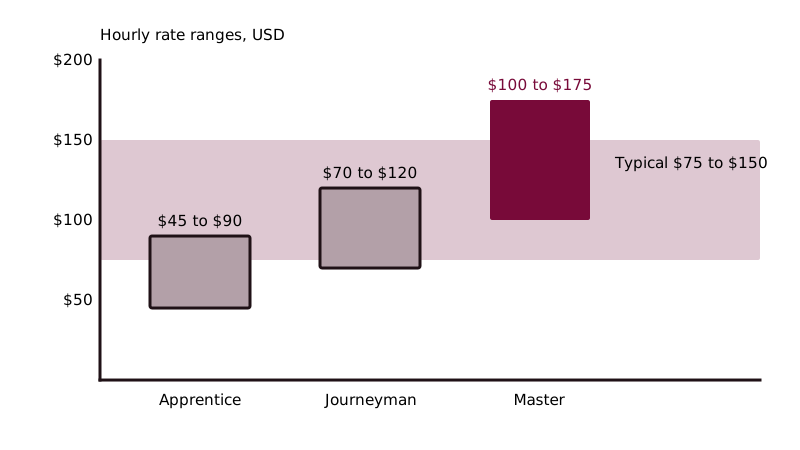
In one published rate guide a plumber's time is priced between $75 and $150 each hour, and many jobs also carry a minimum or service fee somewhere between $50 and $200. Emergencies and senior plumbers cost more. Treat them as nationwide guideposts instead of an offer; your own job sets the final price. Rio Hondo Plumbing arranges the visit.
What hourly figure should I expect on a plumber's bill?
That guide frames the broad band as $75 through $150 and splits it by seniority: apprentices at $45 to $90, journeymen at $70 to $120, masters at $100 to $175. It adds that location moves the number. Use the band as a frame only, since each company sets its own rate.
The spread makes sense: tracing a hidden leak takes a master, while carrying parts takes an apprentice. Overhead sits inside the hourly figure too, covering insurance, vehicles, tools and licensing. A plumber who names one price for the entire job has folded all of that into a single number.
Dense metro areas generally price labor above rural ones, so a quote in the upper half of the band would not be strange in southeast Los Angeles County. Ask for the actual rate and skip the guessing.
What does a call-out fee cover?
The guide shows trip charges, also called service call fees, at about $50 to $200, typically paying for travel and a first look. Certain companies take it off the repair bill once you proceed. Find out before you book whether yours does, and what the fee actually includes.
Urgent visits carry a premium. The guide lists emergency call-out fees of $100 to $300 and emergency hourly rates near $150 to $350. Nights, weekends and holidays often attract it, so a problem content to wait until a weekday morning can cost clearly less. The fee on its own gets more attention in service call pricing.
Flat price or hourly: which should I ask for?
A flat price gives certainty since the plumber absorbs the risk, while hourly billing suits murky jobs that could grow. Familiar repairs, a faucet swap or a toilet replacement for example, are often priced flat. Have that figure in writing, together with a list of inclusions and exclusions.
Diagnosis is where hourly work fits best: tracing a hidden leak or opening a wall. Even then a plumber can offer a cap or an estimate range. A flat price far below the others deserves a question about omissions, because parts, permits and cleanup are what usually go missing.
Two examples of how pricing styles differ are the toilet unclogging cost page and leak detection pricing.
How do I turn the hourly rate into a budget?
Multiply hours by the rate, add parts, then layer on any call-out and permit charge. Using the published ranges as arithmetic: two hours at $75 up to $150 comes to $150 through $300 of labor, and a service fee of $50 up to $200 pushes the total to $200 through $500 before parts. Real jobs drift from that.
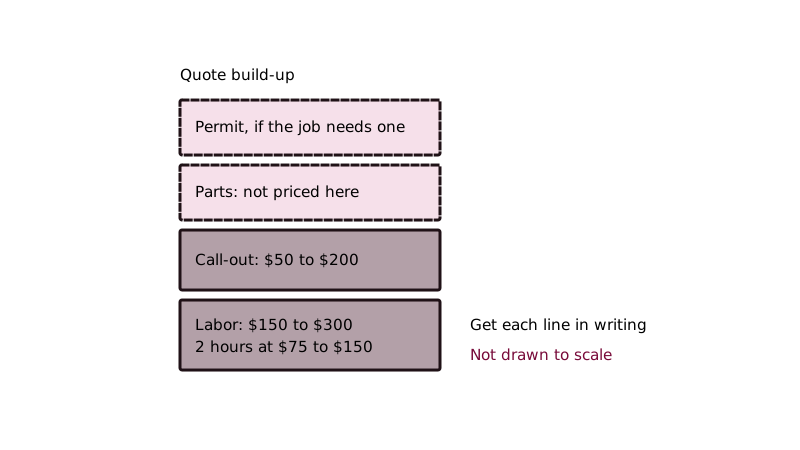
A quick worksheet:
- Estimated hours (ask the plumber).
- Hourly rate.
- Parts, and who supplies them.
- Call-out or minimum fee.
- Permit fee, if the job needs one.
- Disposal or cleanup, if charged.
An online repair estimator does much the same sum behind the scenes, so take a free one as a rough first pass. It cannot see the access, the pipe material or whatever hides behind the wall. A worked example with parts and permits appears in the breakdown of regulator installation cost.
What if a job is priced per fixture, per valve or per square foot?
Repairs are priced by the job, not by area. Swapping a valve or an outdoor spigot is small work, normally a minimum visit plus parts, and no dollar figure is printed here because none of the sources we read offered one. Square-foot pricing belongs to new construction.
A busted pipe follows the same logic. What you pay turns on where the pipe runs, how much must be opened and rebuilt, and what water damage is left. A line in an open crawlspace is a smaller project than one inside a finished wall. Pricing for a new build is discussed in the new house plumbing cost page, and the repair side appears in leaking water pipe repair.
Why are two quotes for one job so far apart?
Seniority of the person on site, the hour, access to the work, the quality of parts, the permit and how much diagnosis is needed all play in. A plumber who explains the cause and writes it down offers more than one who tosses out a round number.
Compare quotes one line at a time: labor, parts, call-out, permit, cleanup. A bargain without the permit may cost more by the end, and a high figure with a better part may last longer. Neither tells you much until you see what is inside.
Which checks come before hiring?
Enter the contractor's name in the CSLB lookup, California's contractor licensing board, and expect a written contract once the job passes $500. State rules make a contractor license mandatory for projects at $1,000 or above in parts plus labor, and whenever a permit is involved. Big cash demands up front are a warning.
Put the price, scope and any permit on paper before work begins. A plumber who lays out the cause, the options and each option's cost is usually worth keeping. Where the emergency premium kicks in is explained under emergency plumbing.
How would I learn the price of my own job?
Describe the problem, where it sits in the house and add any photos in the price request form. A plumber who works nearby visits you in Whittier or the surrounding cities, examines the work, and writes down the price beforehand. Our coverage across southeast Los Angeles County is listed on the service areas page.
For the wider picture, the general guide to plumber cost helps.
Common questions
Are plumbers paid hourly or per project?
Both happen. Diagnosis and uncertain work lean hourly, and familiar repairs lean flat, so it helps to ask which model applies. In either case the figure should be written down, and a flat figure ought to separate parts, labor and any permit so nothing hides inside it.
What makes urgent calls pricier?
They work outside normal hours, and the guide cited here puts emergency rates near $150 to $350 per hour and call-out fees around $100 to $300. The premium pays for availability and for dropping other plans. Waiting for a weekday, where safe, may lower the bill.
If I hire the plumber, does the call-out fee come off the bill?
That depends on the company, because certain firms apply it to the repair while others keep it separate. Before booking, ask if the fee pays for travel, diagnosis or both, and see that the answer lands on your written quote.
Can I trust a free online estimator?
Only as a rough first pass, never as a firm number. These tools do not know your pipe material, your access or hidden damage. Use one to set expectations, then rely on a quote from whoever has examined the work in person.
How much time does the average plumbing job need?
Easy repairs can finish within a couple of hours, and a regulator installation runs around two to four hours in the cost guide we read. Repiping stretches across days. The plumber will give a better figure after seeing the job.